

Last week, Sarah sat at her kitchen table in Subiaco, looking at a stack of NDIS paperwork with a growing sense of dread. She knew her current plan didn't reflect the daily complexities of her health, yet the thought of travelling across the city for another clinical appointment felt overwhelming. This is a common reality for many seeking ndis allied health assessments perth, where the gap between a formal report and lived experience can feel vast. It's completely natural to feel anxious that a brief assessment might miss the nuances of your condition or lead to funding cuts that threaten your independence.
We believe that your home is where your challenges and triumphs actually happen. This guide will help you navigate the assessment process to ensure you receive a comprehensive report that truly advocates for the 'reasonable and necessary' support you deserve. We'll explore how mobile assessments in your own Perth home can capture your functional capacity more accurately than a clinic visit. By combining clinical expertise with a deep respect for your autonomy, you can secure the personalised support you need for independent living.
Key Takeaways
- Understand how professional evaluations establish your functional capacity to secure 'reasonable and necessary' funding for your long-term goals.
- Learn why the Functional Capacity Assessment is the most critical document for NDIS participants in Western Australia to document their daily living needs.
- Discover the practical benefits of choosing in-home ndis allied health assessments perth to ensure your report captures the true complexity of your home environment.
- Identify which NDIS budget categories fund these services and how to select a registered provider with deep roots in the local Perth community.
- Recognise how clinical expertise from experienced Registered Nurses can bridge the gap between complex health conditions and effective allied health support.
What are NDIS Allied Health Assessments and Why Do You Need Them?
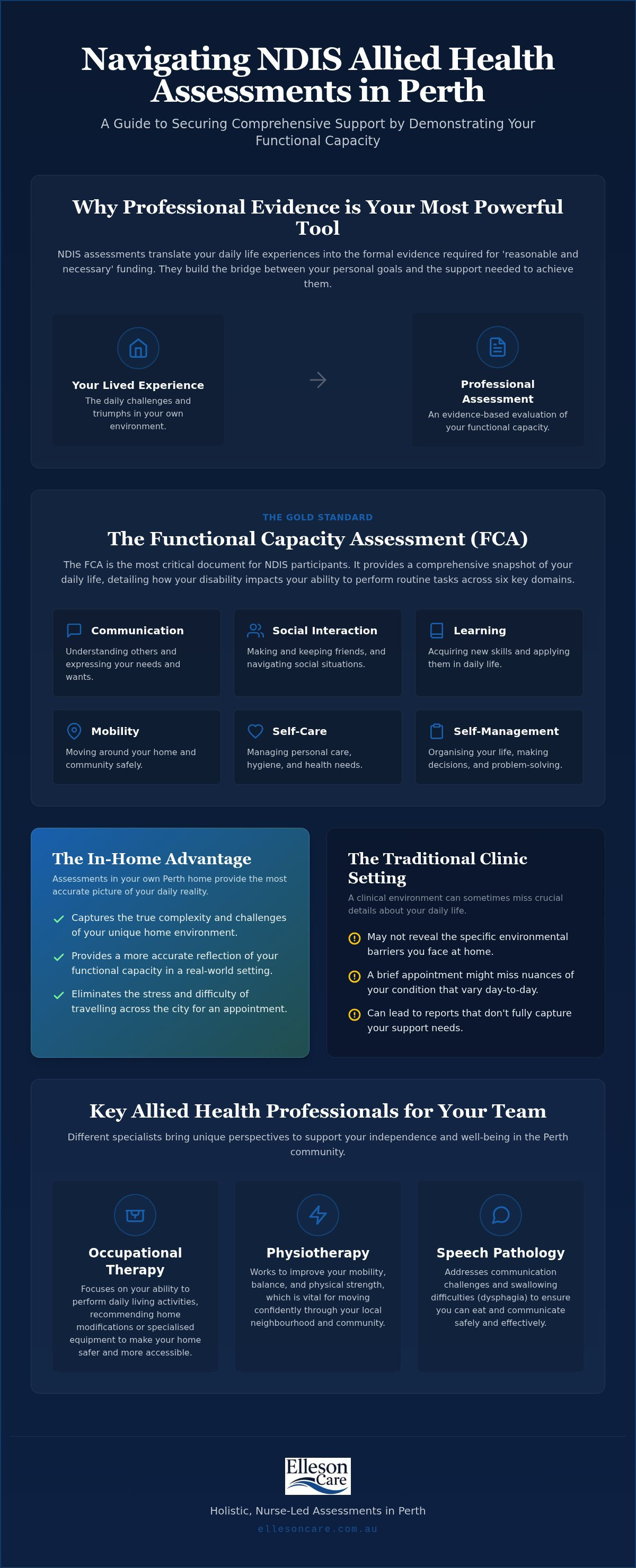
Allied health assessments are thorough, evidence-based evaluations conducted by qualified professionals to determine your functional capacity. These assessments provide a clear picture of what you can do and where you require additional support to live safely and independently. Within the National Disability Insurance Scheme (NDIS), these reports serve as the primary evidence needed to secure funding that is deemed 'reasonable and necessary'. Without high-quality ndis allied health assessments perth, it's often difficult for the NDIA to understand the true impact of your condition on your daily life.
Living in a city as spread out as Perth means your assessment needs to consider your ability to access local community hubs, medical centres, and public spaces. Whether you're visiting a specialist at the Fiona Stanley Hospital precinct or meeting friends at a local café, the assessment looks at the practicalities of these movements. It ensures that your funding reflects the real-world costs of accessing your community safely, taking into account the unique geographic layout of Western Australia.
The Purpose of Professional Evidence in your NDIS Plan
Professional reports bridge the gap between your personal goals and the funding required to achieve them. If your goal is to increase your community participation, perhaps by socialising at Elizabeth Quay or attending a local sports club, an assessment provides the clinical justification for the specific therapeutic interventions needed. These documents are essential during plan reviews or when applying for Specialist Disability Accommodation (SDA) and Supported Independent Living (SIL). They also provide the technical evidence required for complex assistive technology, ensuring the equipment you receive is fit for purpose and safe for your specific needs.
Common Allied Health Disciplines in Perth
Several key disciplines work together to support your independence. Each professional brings a unique perspective to your care and well-being:
- Occupational Therapy: These specialists focus on your ability to perform daily living activities. They often recommend home modifications or specialised equipment to make your Perth home safer and more accessible.
- Physiotherapy: A physiotherapist works with you to improve mobility, balance, and physical strength, which is vital for moving confidently through your local neighbourhood.
- Speech Pathology: These professionals address communication challenges and swallowing difficulties, also known as dysphagia, to ensure you can eat and communicate safely and effectively.
The Functional Capacity Assessment (FCA): The Gold Standard for Funding
The Functional Capacity Assessment (FCA) is often described as the cornerstone of a successful NDIS plan. It provides a comprehensive snapshot of your daily life, detailing exactly how your disability impacts your ability to perform routine tasks. For those seeking ndis allied health assessments perth, the FCA is the most critical document to present to the NDIA. It moves beyond a medical diagnosis to explore the practical reality of your situation, ensuring that the support you receive is truly tailored to your needs.
A high-quality assessment evaluates six key domains: communication, social interaction, learning, mobility, self-care, and self-management. By looking at these specific areas, an assessor can identify "hidden" support needs that might otherwise be overlooked in a standard medical report. This thoroughness is vital to prevent funding gaps that could leave you without necessary care. If you are wondering what is a functional capacity assessment, it is essentially the professional evidence that justifies the level of funding required for your specific lifestyle and goals.
What an FCA Evaluator Looks For
When arranging ndis allied health assessments perth, choosing an evaluator who understands the local landscape is vital. During the evaluation, an expert observes how you perform tasks in your natural environment, whether that is your home in Joondalup or a community space in Fremantle. They look for specific barriers to your independence. In Western Australia, this often includes Perth's heavy reliance on private transport and the vast distances between service hubs. The evaluator also determines if assistive technology or environmental modifications could improve your safety and autonomy.
Securing SIL and SDA Funding
For participants with complex needs, the FCA is the gateway to more intensive support categories. It plays a pivotal role in determining eligibility for Specialist Disability Accommodation (SDA) by providing clinical evidence of the need for specialised housing. Similarly, allied health professionals use these assessments to recommend specific Supported Independent Living (SIL) ratios, ensuring you have the right amount of help at home. The FCA is a critical evidence-based report that outlines a participant's support requirements across all areas of life.
Ensuring your report is detailed and clinically sound is essential for a smooth plan review. Our team at Elleson Care provides nurse-led coordination to ensure your multidisciplinary assessments are cohesive and professional.
Clinic-Based vs. In-Home Assessments: Choosing the Right Path in Perth
Deciding where to conduct your assessment is a significant step in your NDIS journey. While traditional clinic visits offer a controlled environment, in-home evaluations provide insights that are simply impossible to replicate in a medical suite. For many families, the choice depends on the specific goals of the report and the physical comfort of the participant. When arranging ndis allied health assessments perth, it's essential to consider how the environment will influence the final recommendations and the accuracy of the functional data collected.
Perth's unique geography often dictates this choice. For a participant living in Joondalup or Mandurah, travelling to a clinical hub in the inner suburbs can be an exhausting ordeal. This journey often involves long periods in a car or navigating the complexities of the Transperth network. By the time the assessment begins, the participant may already be fatigued or stressed. This can lead to an inaccurate representation of their typical functional capacity. Mobile services solve this by meeting you where you are most comfortable, ensuring the report reflects your true daily capabilities.
The Case for Mobile Allied Health
Mobile assessments eliminate the logistical burden of finding accessible parking near major hospitals or busy metropolitan medical centres. This approach allows a therapist to assess your needs in the exact place where you face daily challenges. For those requiring complex care, such as nursing services or advanced wound management, seeing the home environment is vital. Observing how you navigate your own kitchen or use your bathroom ensures that recommendations for modifications or equipment are practical and safe. It provides a "real-world" perspective that a sterile clinic environment cannot offer.
When a Clinic Visit Might be Necessary
There are times when a clinic-based assessment is the superior option for a participant's specific needs. Clinics often house heavy diagnostic equipment or specialised paediatric sensory gyms that cannot be easily transported to a private residence. These facilities are designed to provide high-intensity sensory input or precise physical measurements in a dedicated space. Additionally, clinics serve as centralised hubs where multidisciplinary team meetings can occur in person. This allows various specialists to collaborate on a single, cohesive plan for your support. A high-tier provider will offer both options, allowing you to choose the setting that best suits your clinical needs and personal circumstances.
Step-by-Step: How to Organise Your Allied Health Assessment
Organising your ndis allied health assessments perth begins with a careful review of your current NDIS plan. Most therapeutic supports are funded under the 'Capacity Building' category, specifically within the 'Improved Daily Living' budget. It's essential to confirm you have sufficient funds allocated before booking your consultation. If your plan is managed by a third party, confirm their requirements for service agreements to avoid any administrative delays.
Finding a registered provider in Perth that aligns with your specific values is equally important. You should look for professionals who demonstrate a deep understanding of your condition and who are willing to collaborate with your existing care team. Collecting your historical medical records, previous therapist notes, and specialist reports beforehand provides the assessor with a complete clinical history. This preparation ensures that no detail of your health journey is overlooked during the evaluation process.
Preparing for the Consultation
Preparation is key to a successful assessment day. We recommend making a detailed list of your 'worst days' to ensure the report captures the full scope of your disability. While it's natural to want to show your best self, the NDIA requires evidence of the challenges you face on your most difficult days. Involving family members or your NDIS support coordinator can provide an objective perspective that strengthens the final report. Think clearly about your goals for the next 12 months. Whether you want to improve your mobility or gain more independence at home, these objectives should be the focus of the interview and observation phase.
Reviewing the Final Report
Once the assessment is complete, the resulting report must be clear and actionable. Each recommendation should link directly to an NDIS outcome to increase the likelihood of funding approval. Carefully check that any requests for assistive technology or home modifications are properly justified with clinical evidence. In Western Australia, the typical timeline for receiving a completed report is between two and four weeks. If the report doesn't accurately reflect your needs, don't hesitate to ask for a review before it is submitted to the NDIA. If you need assistance coordinating your next clinical evaluation, our team at Elleson Care is here to help you secure the support you need.
The Elleson Care Difference: Holistic, Nurse-Led Assessments in Perth
Choosing a provider for your ndis allied health assessments perth is a decision that impacts the quality of your long-term support. At Elleson Care, our West Australian roots run deep. Being WA owned and operated allows us to understand the specific challenges of the local healthcare system, from the wait times at major metropolitan hospitals to the availability of specialists in regional corridors. We don't just provide a report; we offer a clinical partnership built on over 22 years of nursing experience. This medical background allows us to coordinate multidisciplinary allied health teams with a level of precision that ensures every therapeutic recommendation is safe, practical, and clinically sound.
We believe in a holistic family approach to healthcare. A participant's well-being is intrinsically linked to the health and stability of their support network. Our assessments consider the needs of the individual alongside the capacity of their primary carers. By taking this comprehensive view, we can help integrate your allied health goals with other essential services, such as respite care in Perth. This creates a truly sustainable support plan that prevents carer burnout and fosters a stable, nurturing home environment for everyone involved.
Compassionate Expertise for Complex Needs
For participants living with complex health conditions, a standard assessment often falls short. Our Registered Nurses provide specialised oversight for those with respiratory, cardiac, or high-intensity physical requirements. We ensure that any recommendations made by an Occupational Therapist or Physiotherapist align perfectly with your existing clinical nursing care, such as ventilator support or oxygen management. This clinical advocacy is vital during ndis allied health assessments perth, as it ensures the NDIA understands the technical necessity of your support levels. We act as a bridge between complex medical needs and the functional goals of the NDIS.
Your Local Perth Care Partner
Our commitment to dignity and safety extends across all Perth suburbs. Whether you are located in the northern coastal reaches or the southern hills, we bring our "Compassionate Expert" approach directly to your door. We prioritise your autonomy at every step, ensuring that the assessment process is a collaborative experience rather than a clinical transaction. Our goal is to provide you with the stability and confidence needed to navigate your NDIS journey successfully. If you are ready to secure a report that truly reflects your clinical complexity and personal aspirations, contact Elleson Care today to discuss your assessment needs with a team that genuinely cares.
Securing Your Future Independence with Professional Evidence
Securing the right funding for your NDIS plan relies on high-quality professional evidence that accurately reflects your daily life. By prioritising the Functional Capacity Assessment, you ensure that your support levels are justified and sustainable. Choosing in-home ndis allied health assessments perth allows you to avoid the stress of travel while providing a therapist with a clear view of your unique home environment. This practical approach leads to more effective recommendations for assistive technology and home modifications that truly support your independence.
As a West Australian owned and operated provider, our team is led by Registered Nurses with over 22 years of experience. We specialise in complex clinical support and holistic in-home care, ensuring that your health needs are managed with both technical expertise and human warmth. We are committed to advocating for your autonomy and well-being through every stage of your NDIS journey. Enquire About NDIS Allied Health Support with Elleson Care to discuss how we can help you achieve your goals for independent living. You don't have to face these administrative challenges alone; we are here to provide the steady, reliable support you and your family deserve.
Frequently Asked Questions
How much does an NDIS Functional Capacity Assessment cost in Perth?
The cost of an assessment is governed by the NDIS Pricing Schedule, which sets maximum hourly rates for various disciplines. For example, the maximum rate for Occupational Therapy is currently $193.99 per hour. These assessments usually require several hours of clinical work, including direct observation, interview time, and comprehensive report writing. You should check your current plan to ensure you have sufficient Capacity Building funds to cover the total clinical hours required.
Can I use my NDIS funding for an allied health assessment if it's not explicitly mentioned in my plan?
You can often use funds from your 'Capacity Building' budget, specifically under the 'Improved Daily Living' category, even if the assessment isn't named as a specific line item. The support must meet the 'reasonable and necessary' criteria and align with your stated goals. It's always wise to consult with your support coordinator or plan manager to ensure your current budget supports the clinical hours needed for ndis allied health assessments perth.
How long does a typical allied health assessment take from start to finish?
A comprehensive evaluation typically involves between ten and fifteen hours of clinical time. This includes the initial face-to-face consultation, which may take two to three hours, followed by extensive data analysis and report preparation. The final document is a detailed clinical record used to justify your support needs. In Western Australia, the process from the initial appointment to receiving the completed report generally takes between two and four weeks.
What is the difference between a clinical assessment and an NDIS functional assessment?
A clinical assessment focuses on diagnosing a condition or determining a specific medical treatment plan. In contrast, an NDIS functional assessment examines the practical impact of a disability on your daily life and independence. It evaluates your ability to perform routine tasks across domains like self-care, mobility, and social interaction. This evidence is vital for the NDIA to determine the level of funding required for your ongoing support and equipment needs.
Do I need to see a GP before booking an allied health assessment in WA?
You don't strictly need a GP referral to book an assessment if you are already an NDIS participant with appropriate funding. However, having a recent medical history from your doctor can be incredibly helpful for the assessor. It provides a baseline of your health status and any co-morbidities that may impact your functional capacity. Our nurse-led team often reviews these medical reports to ensure our multidisciplinary approach is cohesive and clinically accurate.
Can an allied health assessment be done via telehealth in Perth?
Telehealth is an available option for certain parts of the assessment process, such as the initial interview or goal-setting discussions. While convenient, it may not always capture the full complexity of your physical environment or mobility challenges. For a truly accurate Functional Capacity Assessment, an in-home visit in your local Perth suburb is often preferred. This allows the therapist to observe your real-world interactions with your living space and any existing equipment.
What happens if I disagree with the findings in my allied health report?
If you feel the report doesn't accurately reflect your daily challenges, you should discuss your concerns with the therapist immediately. You have the right to request amendments or provide additional information that may have been missed during the consultation. It's important that the final document is a fair representation of your functional capacity before it is submitted to the NDIA. A transparent provider will always welcome your feedback to ensure clinical accuracy and personal dignity.
How often should I have my functional capacity reassessed by the NDIS?
Reassessments are typically conducted every twelve to twenty-four months, usually in preparation for a scheduled NDIS plan review. You may also require a new assessment if your circumstances change significantly, such as a decline in health or a transition to a new living arrangement. Regular ndis allied health assessments perth ensure your funding remains aligned with your current needs. This proactive approach helps maintain the stability and quality of your long-term support.


