

What if the secret to staying in your own home for life wasn't just about finding someone to help with the cleaning, but about having a clinical safety net right in your living room? Most West Australians want to age where they feel most comfortable, yet the shift to the Support at Home program on 1 November 2025 has left many families feeling overwhelmed by new regulations and contribution categories. It’s natural to feel uncertain when looking for in home aged care Western Australia, especially when you’re worried about whether a provider can handle complex health needs or if you’ll be left without support during a medical emergency.
You deserve more than just a checklist of chores; you deserve the peace of mind that comes with professional, nurse-led care tailored to the specific needs of WA families. We understand that maintaining your dignity means having support that evolves as your health does, moving beyond basic domestic help into specialised clinical expertise. This guide will clarify the 2026 funding changes, explain how to secure government support for nursing services, and help you build a sustainable plan to remain independent in the home you love.
Key Takeaways
- Navigate the local landscape of in home aged care Western Australia to ensure you or your loved one can age safely and with dignity in your own community.
- Distinguish between basic domestic help and the essential clinical safety net provided by nurse-led healthcare for those with complex health needs.
- Clarify how to secure government funding under the 2026 Support at Home program, including the full coverage of clinical nursing services.
- Learn how to create a safer environment through professional assessments and home modifications designed to support your plan for staying home for life.
- Recognise the value of partnering with a local, nurse-led provider that prioritises clinical excellence and a holistic family approach.
The Landscape of In-Home Aged Care in Western Australia
In Western Australia, the concept of support has evolved far beyond the confines of traditional facilities. Whether you live in the heart of Perth or a quiet regional town in the South West, in home aged care Western Australia now represents a sophisticated system of clinical and domestic assistance delivered where you feel safest. The historical framework of Aged care in Australia has shifted significantly, moving away from institutional models toward a person-centred approach that prioritises your personal dignity. This shift ensures that your home remains a place of sanctuary rather than just a residence.
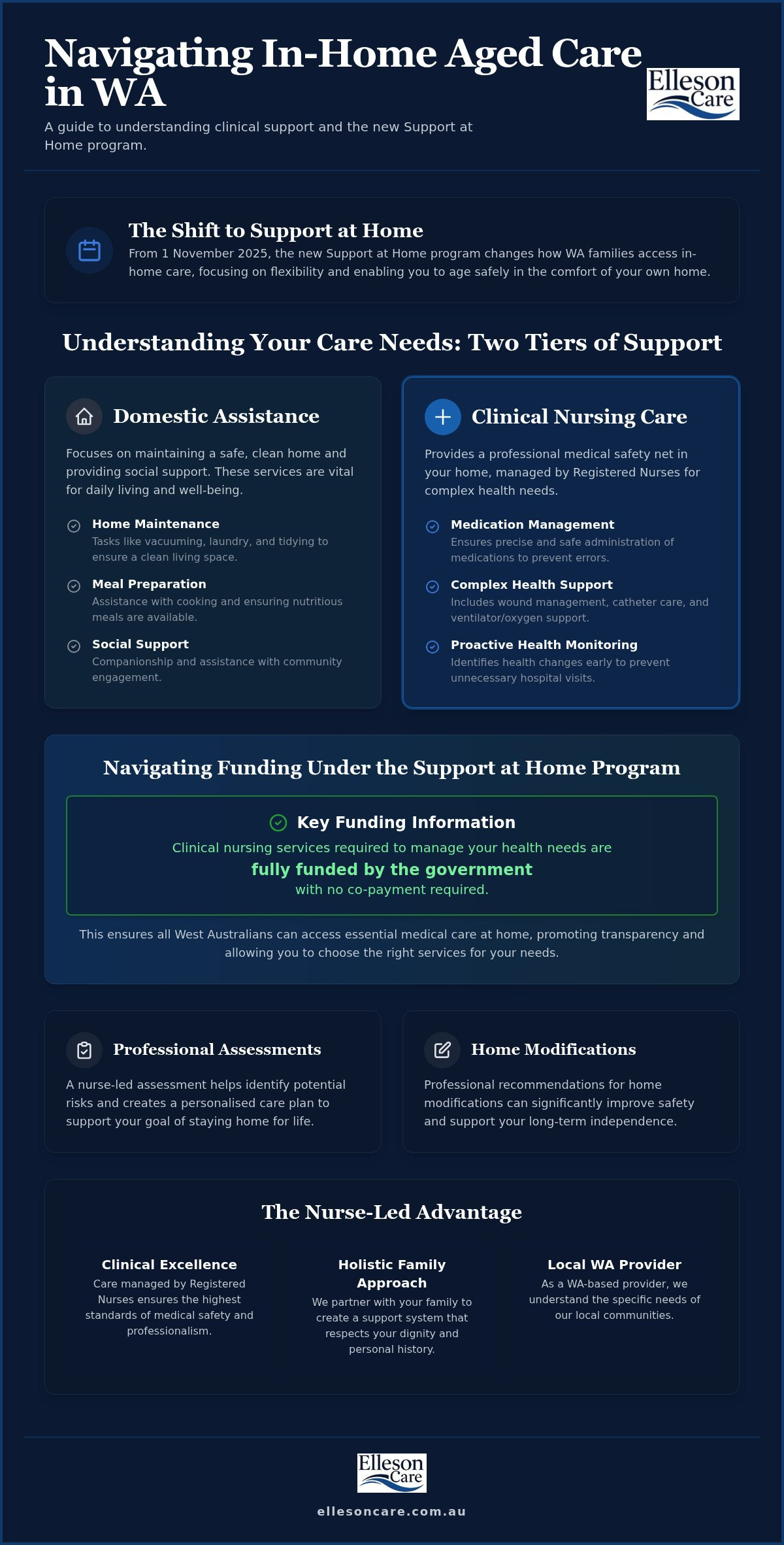
The introduction of the Support at Home program on 1 November 2025 fundamentally changed how local families access help. This new system provides a clearer pathway for West Australians to receive the specific level of care they require, from basic domestic help to complex clinical nursing. By 2026, the focus has firmly landed on transparency and flexibility, allowing you to choose services that align with your lifestyle while the government fully funds essential clinical care. This model supports the natural desire to stay connected to your community while receiving professional medical oversight.
Why WA Families are Prioritising Home-Based Support
Remaining in a long-term family home offers more than just comfort; it preserves the emotional connection to a neighbourhood and a lifetime of memories. For many West Australians, maintaining a sense of autonomy is the primary goal. You keep control over your daily routines, from when you enjoy your morning tea to which local community groups you visit. In our diverse WA communities, home-based care also allows for a higher degree of cultural sensitivity. Care is delivered in a way that respects your personal history and traditions, ensuring you feel seen and respected as an individual. It’s about staying where you're known and valued.
Current Trends in WA Aged Care for 2026
The year 2026 has seen a marked increase in the integration of healthcare technology within private residences. Families now utilise remote monitoring and telehealth to bridge the gap between hospital-grade care and the comfort of the lounge room. This trend is driven by a growing demand for specialised nursing services that can manage chronic conditions or post-operative recovery at home. The current regulatory environment also demands greater provider transparency. You now receive clear, written summaries of all fees before services begin, ensuring there's no confusion regarding your care plan. This environment empowers families to choose providers based on clinical excellence and ethical standards, ensuring a steady and reliable presence in their lives.
Clinical Nursing vs. Domestic Assistance: Understanding Your Needs
Many families looking for in home aged care Western Australia initially focus on domestic tasks like vacuuming, laundry, or meal preparation. While these services are vital for maintaining a clean and safe environment, they don't address the medical complexities that often arise as we age. Clinical nursing involves healthcare tasks performed by qualified professionals, whereas domestic assistance focuses on social support and home maintenance. Understanding this distinction is the first step in accessing aged care services that truly protect your long-term health and safety.
A nurse-led model provides a level of security that standard domestic care cannot match. Registered Nurses bring clinical authority to your home, identifying subtle changes in health before they become emergencies. This proactive stance is essential for those living with chronic conditions. Professional wound management and precise medication administration significantly reduce the risk of infections or adverse reactions. In Perth, having this clinical oversight often means the difference between staying comfortable at home and an unnecessary trip to the emergency department.
Specialised Clinical Care at Home
For those with chronic health requirements, clinical support includes managing complex needs such as ventilator and oxygen support or catheter care. These services require a high degree of technical skill and a disciplined approach to hygiene. Registered Nurses also play a vital role in palliative care, ensuring that end-of-life support is handled with profound empathy and clinical precision. Clinical home care serves as a sophisticated, hospital-grade alternative that respects your desire for privacy and personal dignity.
Holistic Support for Daily Living
While medical care is the foundation, holistic support ensures your daily life remains fulfilling and manageable. Personal care services assist with showering and dressing while maintaining your privacy. Domestic assistance keeps your living space organised and safe, which directly reduces the risk of falls and trip hazards. Additionally, social and community access helps prevent the isolation that many seniors face. This balanced approach is what makes in home aged care Western Australia such a viable long-term solution for local families. If you're unsure which level of support is right for your family, speaking with a nurse-led provider can help clarify your options.
Navigating Funding: The Support at Home Program in WA
Securing financial support for in home aged care Western Australia can feel like a daunting task, particularly with the significant reforms that commenced on 1 November 2025. The transition from the old Home Care Packages to the current Support at Home program was designed to make the system more transparent and responsive to individual needs. Under this 2026 framework, the government has prioritised clinical safety by fully funding nursing and allied health services. This ensures that your medical needs are met without the burden of a basic daily fee, allowing you to focus on your well-being rather than your budget.
The WA Primary Health Alliance Aged Care Program plays a significant role in implementing these reforms across our state, focusing on reducing hospitalisations through better home-based support. These changes ensure that West Australians have a clearer pathway to the help they need, regardless of where they live.
The Assessment Journey: From Referral to Care
The first step in your journey is contacting My Aged Care to request a local assessment. In Western Australia, this typically involves a meeting with the Aged Care Assessment Team (ACAT). To prepare, it is helpful to document your medical history and specific daily challenges. Think about the tasks that have become difficult or unsafe to perform alone. During the meeting, be clear about your goals, whether that is maintaining your garden or managing a complex health condition. It is also important to understand the difference between a functional home assessment and a clinical review, as the latter focuses specifically on your medical and nursing requirements. For those who have served, the Department of Veterans’ Affairs (DVA) provides parallel funding pathways that can often be used to ensure comprehensive clinical coverage.
Maximising Your Government Funding
Choosing a provider that aligns with your specific funding level is crucial for long-term independence. When selecting a partner, look for transparent fee structures that clearly outline your contributions. Since the new system requires individuals to contribute toward "independence" and "everyday living" services, knowing exactly where your money goes is essential. A "no hidden costs" approach ensures your funding is directed toward the care that matters most to your quality of life. For a detailed breakdown of how these contributions and service categories work in the current year, you can explore our Support at Home Program guide. This clarity allows you to make informed decisions with confidence and peace of mind.
Planning for Independence: Creating a Safe Home Environment
Achieving long-term independence requires a physical environment that supports your changing needs. While the clinical oversight discussed earlier provides a safety net, the layout of your home often determines your daily confidence. Planning for in home aged care Western Australia involves more than just selecting a provider; it requires a holistic view of your living space. Allied health assessments identify specific mobility risks before they lead to an injury. Whether it's a smooth transition after a hospital stay or a long-term plan for ageing in place, a well-prepared home is the foundation of safety.
Home Safety and Accessibility
Small changes yield the most significant results. Evaluating lighting, removing trip hazards, and installing grab rails are practical steps to prevent falls. Advanced monitoring systems can provide peace of mind without compromising your privacy. Consulting with professional clinicians for bespoke home modification plans ensures every change aligns with your specific clinical requirements and lifestyle.
The Crucial Role of Respite Care
Caring for a loved one is a profound commitment, but it can be demanding for families. In Western Australia, many carers belong to the "sandwich generation", balancing the needs of ageing parents with their own careers. Respite care provides a necessary break, ensuring the primary carer can rest while a professional maintains a high standard of care. You might choose daytime support or overnight care. For more information, read our Respite Care in Perth guide.
Transitioning back to a Perth home after a hospital stay requires careful coordination. Organising post-hospital care ensures that clinical needs, such as wound management or medication adjustments, are met immediately upon arrival. This structured approach reduces the risk of readmission and allows you to recover in a familiar, comfortable setting. If you're ready to discuss a tailored safety plan for your residence, you can contact our nurse-led team for professional guidance.
The Elleson Care Difference: Nurse-Led Support in WA
Elleson Care is a West Australian owned and operated specialist, uniquely positioned to understand the specific needs of local families. Our leadership is defined by Registered Nurses with over 22 years of clinical experience, providing a foundation of expertise that generic agencies often lack. This background ensures that every decision made regarding your in home aged care Western Australia is grounded in medical evidence and a deep respect for your personal safety. We believe that professional care shouldn't feel like an intrusion. Instead, it should feel like a reliable partnership that honours your life story and protects your independence.
Our holistic family approach distinguishes us from larger, impersonal organisations. We recognise that care needs impact the entire household, and we strive to provide stability for both the individual and their loved ones. By focusing on person-centred care, we ensure that your preferences and daily routines remain at the heart of our service. It’s about more than just clinical tasks; it’s about providing a compassionate presence that respects your dignity and autonomy while maintaining the highest ethical standards.
Clinical Excellence Meets Compassion
Having a nurse-led team means that complex medication regimes and specialised clinical needs are managed with precision. Our staff are trained to maintain high-tier professional standards while delivering care with genuine human warmth. This clinical safety net allows you to remain at home even as your health needs become more sophisticated, providing a hospital-grade alternative in a familiar setting. For a detailed look at our clinical capabilities, you can read our Nursing Services guide.
A Partner in Your Care Journey
We act as a bridge between your home and the broader healthcare system. By collaborating closely with GPs and specialists across Western Australia, we ensure that your care plan is consistent, effective, and evidence-based. We understand that health is not static, so our plans are designed to be dynamic, growing and adapting as your requirements change over time. Whether you are navigating the NDIS, Aged Care, or DVA pathways, we provide the disciplined and steady support you need to stay in the home you love. Our goal is to be a reliable presence you can trust, ensuring your quality of life is always the priority.
Securing Your Future at Home
Navigating the evolving landscape of in home aged care Western Australia requires a careful balance of practical preparation and clinical expertise. By understanding the 2026 funding reforms and prioritising nurse-led support, you can ensure your residence remains a place of safety and dignity for years to come. Success in ageing in place isn't just about domestic assistance; it's about having a professional medical safety net that adapts as your requirements change. Whether you're managing complex health conditions or simply planning for a more secure future, the right partnership provides the stability your family needs.
As a West Australian owned and operated provider, Elleson Care brings 22+ years of healthcare experience and nurse-led clinical expertise to every family we serve. We're here to help you navigate the My Aged Care system with the steady confidence of a compassionate expert. Speak with a Registered Nurse at Elleson Care today to discuss a tailored care plan that honours your independence and personal story. You don't have to face these transitions alone. With the right support, staying home for life is a goal you can achieve with total peace of mind.
Frequently Asked Questions
How do I start the process for in-home aged care in Western Australia?
Start by contacting My Aged Care on 1800 200 422 to register and request a face-to-face assessment. In Western Australia, this usually leads to an appointment with the Aged Care Assessment Team (ACAT) to determine your eligibility. This initial step is essential for accessing government-funded in home aged care Western Australia. Having your Medicare card and medical history ready will help ensure the process moves as efficiently as possible for your family.
What is the difference between the Support at Home program and Home Care Packages?
The Support at Home program is the new system that replaced the former Home Care Packages on 1 November 2025. The primary difference lies in the funding structure; clinical services like nursing are now fully government-funded for everyone. For other services, such as cleaning or transport, you now contribute a specific percentage based on your means testing, whereas the old package model provided a fixed annual budget.
Can I choose my own nurses and carers with Elleson Care?
We prioritise building a steady relationship between you and your care team. While we assign staff based on specialised clinical requirements, we always listen to your preferences to ensure a comfortable fit. Our nurse-led leadership ensures that every carer coming into your residence meets high-tier professional standards. This person-centred approach ensures you feel respected and safe in your own environment while receiving the specific support you require.
Is clinical nursing available for palliative care at home in Perth?
Specialised clinical nursing is a core component of our palliative care support across Perth. Our Registered Nurses, who bring over 22 years of healthcare experience, focus on symptom management and pain relief to ensure you remain comfortable. This expert oversight allows you to receive hospital-grade medical care within the privacy of your own home, prioritising your dignity and personal wishes during a sensitive time for your family.
How much does in-home aged care cost in WA?
Under the 2026 regulations, the cost of in home aged care Western Australia varies depending on the specific services you receive and your financial assessment. Clinical nursing and allied health services are fully funded by the government for all eligible participants. For non-clinical support, such as domestic assistance or gardening, individuals generally contribute between 5% and 80% of the service cost, depending on their income and assets.
What happens if my care needs increase over time?
Your care plan is a dynamic document that evolves alongside your health. If your requirements increase, we work closely with you, your GP, and specialists to adjust your level of support. This ensures a seamless transition to more intensive clinical oversight or additional personal care without the need to move into a facility. Our goal is to provide a reliable presence that adapts to keep you safe and independent for life.
Do you provide support for veterans through the DVA program?
We provide dedicated support for veterans through the Department of Veterans' Affairs (DVA) Community Nursing and Veterans' Home Care programs. These pathways can often be used alongside other aged care funding to ensure you receive a comprehensive clinical safety net. Our team is experienced in navigating these specific regulations, ensuring those who have served receive the high-tier professional care they deserve in their local WA community.
Can I receive NDIS and Aged Care support simultaneously?
Usually, individuals transition from the NDIS to the aged care system once they reach 65 years of age. However, the 2026 regulations include specific provisions for those who were already NDIS participants to ensure their level of support doesn't decrease. It is important to discuss your specific circumstances with a professional to understand how these systems interact and to ensure your care remains consistent and evidence-based during any transition.


