

What if safe PEG feeding support depends as much on clear communication as on the feeding routine itself? For families seeking PEG feeding support NDIS Perth, it can be difficult to know which tasks need clinical nursing oversight, how support workers fit into daily care, and how the requested support relates to NDIS goals and funding.
It’s understandable to want a consistent routine that respects the participant’s choices and everyday life. A clear, person-centred plan helps everyone understand their role and what to do when care needs or instructions change.
This guide explains how PEG-related support can fit into NDIS-funded care, what clinical coordination involves, and how to plan for home routines, appointments and community activities. You’ll also learn how participants, families, support workers and clinical professionals can work together. Elleson Care provides NDIS support and clinical nursing services in Perth. Its registered-nurse-led team brings more than 22 years of experience to care shaped around each participant’s needs, goals and routines.
Key Takeaways
- Plan PEG feeding support around the participant’s clinical instructions, daily routines and personal goals.
- Follow current clinician-approved guidance for feeding and tube care, and seek clinical advice before making changes.
- Prepare instructions, contacts and routine preferences to support continuity at home, in the community and at appointments.
- Consider how clinical nursing, daily assistance and coordination relate to the participant’s NDIS plan, without assuming funding is automatic.
- Elleson Care’s registered-nurse-led team provides person-centred NDIS and clinical support in Perth, drawing on more than 22 years of experience.
What does PEG feeding support involve for NDIS participants in Perth?
A PEG feeding routine can shape everyday activities, from meal times to outings and family schedules. Participants and families may also need time to adjust to equipment, instructions and new care roles. Support is most useful when it reflects the person’s preferences and follows their current clinical instructions, rather than applying a standard routine to everyone.
PEG feeding support is person-specific assistance that helps a participant follow their clinician’s instructions for tube feeding, while coordinating care around daily life. It differs from general daily assistance because some tasks may require clinical oversight or specific training.
What is a PEG tube, and why might someone use one?
Percutaneous endoscopic gastrostomy describes a method of placing a feeding tube through the abdominal wall into the stomach. The tube provides a way to deliver nutrition directly to the stomach when the person’s treating team has determined it is appropriate. Having a PEG tube does not, by itself, explain a person’s diagnosis or predict what their future care will involve.
The term Percutaneous endoscopic gastrostomy (PEG) refers to the procedure used to create this access. The participant’s treating clinician sets the feeding plan and provides the clinical instructions. Those instructions guide everyone involved in supporting the routine.
What can PEG feeding support at home include?
In a Perth home-care arrangement, support may involve helping the participant organise their day around the agreed routine, communicating relevant observations to the appropriate clinical professional, and coordinating with family or other members of the care team. The specific support depends on the participant’s needs, preferences and clinical plan.
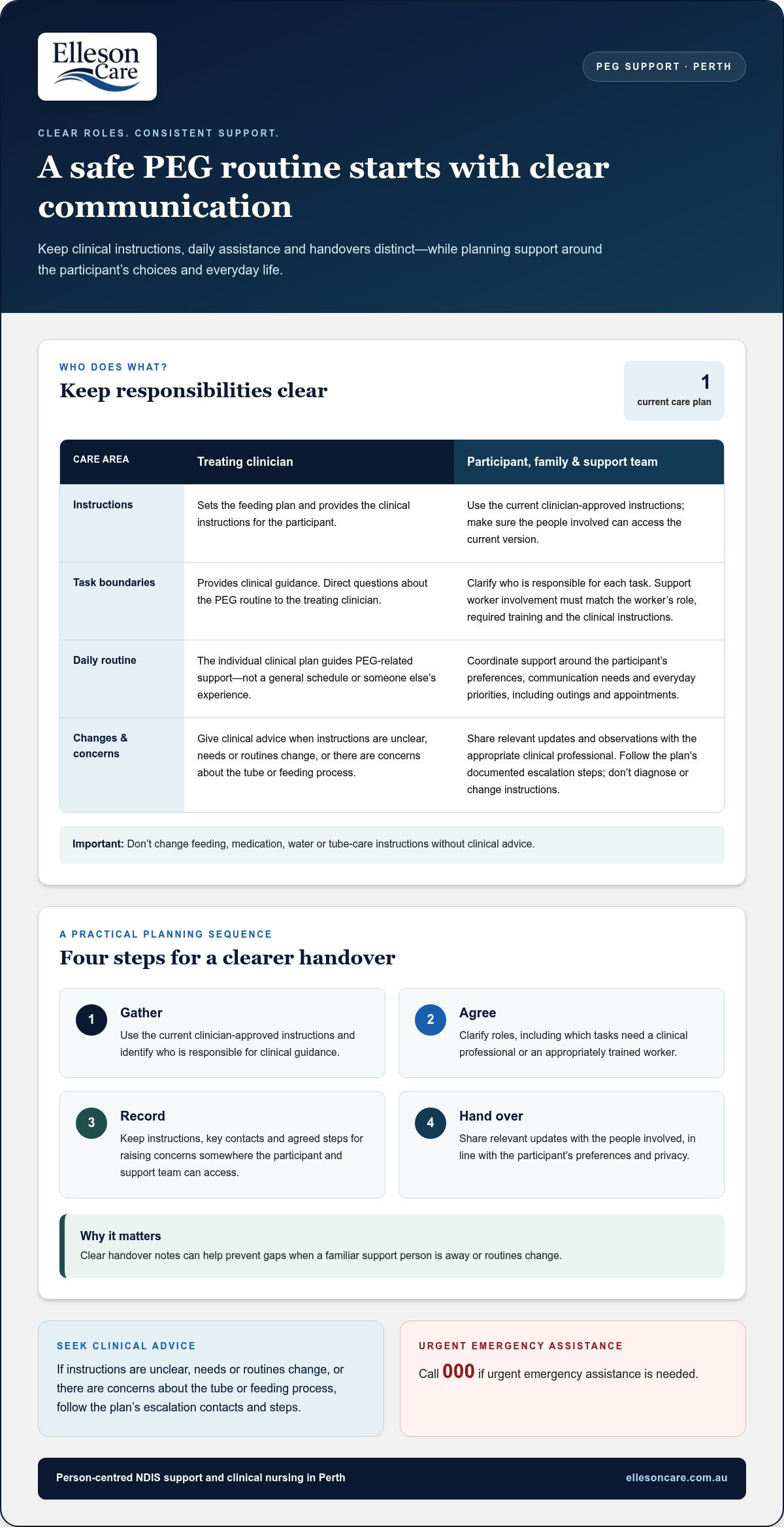
Keep clinical tasks distinct from general household or daily-living assistance. Any support worker involvement in PEG-related tasks must be consistent with the person’s clinical instructions, the worker’s role and any required training. A task being part of the daily routine does not automatically make it suitable for every team member.
For example, a participant may need help planning an outing around their feeding schedule, alongside separate clinical support for PEG-related care. The care arrangements should make clear who follows the clinical instructions, how relevant information is shared, and who to notify if something changes. A written outline of roles and communication steps can make the routine easier for the participant and family to follow.
For families considering PEG feeding support NDIS Perth, start with the participant’s clinician-approved instructions and everyday priorities. Clinical nursing and NDIS support can then be coordinated around the person, their choices and their life at home.
How can PEG feeding support stay safe and consistent at home?
A reliable routine starts with the participant’s current instructions from their treating clinician. Keep them clear and accessible to the participant and the people involved in support. When instructions are updated, make sure everyone is working from the current version.
PEG routines should follow the participant’s individual clinical plan, not a general schedule or someone else’s experience. Don’t change feeding, medication, water or tube-care instructions without clinical advice. Direct questions about the routine to the treating clinician.
What should a person-centred PEG support plan cover?
Make the plan practical as well as clinically guided. Reflect how the participant wants support to be provided, their communication needs, preferred routines and involvement in decisions. Include relevant clinical instructions, the names and contact details of responsible professionals, and the agreed process for reporting concerns.
A simple planning sequence can help:
- Gather: use the current clinician-approved instructions and identify who is responsible for clinical guidance.
- Agree: clarify roles, including which tasks require a clinical professional or appropriately trained worker.
- Record: keep instructions, key contacts and agreed steps for raising concerns in a format the participant and support team can access.
- Hand over: share relevant updates with the people involved, in line with the participant’s preferences and privacy.
Clear handover notes can help prevent gaps when a familiar support person is away or routines change. NDIS guidance for high-intensity daily personal activities, including enteral feeding, is discussed in this overview of the NDIS Practice Standards. Keep responsibilities clear and consistent with the participant’s care arrangements.
When should a participant or carer seek clinical advice?
Contact the treating clinician if instructions are unclear, the participant’s needs or routine change, or there are concerns about the tube or feeding process. Follow the escalation contacts and steps documented in the individual plan. Family members and support workers should not diagnose a problem or change care instructions themselves.
If urgent emergency assistance is needed, call 000. For planned support, Elleson Care provides NDIS support and clinical nursing services in Perth.
For families arranging PEG feeding support NDIS Perth, a current plan and calm, consistent communication help keep support aligned with the participant’s choices. Elleson Care’s registered-nurse-led team provides person-centred NDIS and clinical nursing support in Perth. Learn about Elleson Care’s support.
How does PEG feeding support relate to an NDIS plan in Perth?
PEG-related support is not automatically funded simply because a participant has a PEG tube. The NDIS considers individual circumstances, plan details and current funding rules. A planning discussion is more useful when it explains how support relates to the participant’s everyday functioning, independence and goals, rather than focusing only on a diagnosis or task.
Gather current clinical recommendations and describe the assistance needed, how often it is required, and what the participant can do independently. For example, explain whether support is needed to follow an established routine, take part in community activities or manage aspects of daily life. These details can help clarify a request, but they do not guarantee a funding outcome. Check current guidance through the NDIS website and consider how it applies to the participant’s plan.
What PEG-related needs may be relevant to an NDIS planning discussion?
Describe the practical effect on daily life. Note which activities are affected, the support frequency recommended by the treating clinician, and how the requested assistance connects with the participant’s stated goals. Keep clinical recommendations distinct from general support preferences, and use current information rather than assumptions about what a person with a PEG tube needs.
The comprehensive guide to nursing services in Perth offers further context on how clinical care at home can be tailored to individual needs.
Who may be involved in coordinating PEG feeding support?
The participant’s choices should guide coordination. Family or informal carers may share relevant knowledge and help maintain continuity, while nurses provide clinical input within their professional role. Support workers may assist with agreed daily support when appropriately guided. A support coordinator or plan manager may also contribute, depending on the participant’s arrangements. Clinical responsibilities should follow professional guidance and applicable requirements.
Use the questions below to organise a planning discussion:
| Area | Questions to clarify |
|---|---|
| Clinical nursing needs | What does the treating clinician recommend? Which aspects require clinical oversight, and how often? |
| Daily assistance | What help is needed to fit the routine around daily activities, and what can the participant do independently? |
| Coordination | Who shares updates, maintains current instructions and communicates changes across the participant’s team? |
For PEG feeding support NDIS Perth, clear information and role boundaries help families explain the request and plan coordinated care without assuming funding is assured.
What should Perth families plan when arranging PEG feeding support?
Preparation helps a care team understand more than the feeding routine. It gives them a clearer picture of the participant’s priorities, communication preferences and the practical details that help support feel respectful at home and in the community.
What information helps a care team understand the participant’s needs?
With the participant’s agreement, gather the information the team needs to provide coordinated support. A concise folder or accessible digital record can include:
- Current instructions from the treating clinician and relevant clinical contact details.
- The participant’s goals, preferred routines and communication needs.
- Relevant emergency contacts and agreed steps for sharing concerns.
- Practical preferences for support at home, during community access and around appointments.
- Cultural or personal preferences that should shape how support is offered.
Ask the participant what independence and meaningful choice look like for them. One person may want support to fit around a preferred daily routine; another may want to choose how information is shared or who joins discussions. Keep personal and health information private, and share it only with people appropriately involved in the participant’s support.
How can support remain consistent as routines or needs change?
Agree on a straightforward handover process so relevant updates reach the people involved. If clinical instructions or circumstances change, share the update promptly through the agreed channels and make sure everyone is working from current information. Don’t rely on informal messages alone for changes to clinical care.
Continuity matters at home, during outings and appointments, and when support arrangements change. Keep the participant involved in decisions wherever possible. Family members and support workers can raise concerns respectfully, listen to the participant’s preferences and follow the agreed process for clinical questions. Clear roles make it easier to address concerns while respecting the person’s choices.
Family members who provide ongoing support may also find it useful to explore options for family care and breaks in the Perth respite care family guide.
For families arranging PEG feeding support NDIS Perth, a clear picture of the participant’s goals, instructions and everyday preferences helps shape coordinated support. Elleson Care provides NDIS and clinical nursing services in Perth. Talk with Elleson Care about your support needs.
How Elleson Care supports NDIS participants with complex needs in Perth
Complex support works best when clinical care and everyday assistance are considered together, with the participant’s goals and preferences at the centre. Elleson Care provides NDIS support and clinical nursing services in Perth, with a person-centred, family-aware approach to care delivered at home.
The team is led by registered nurses with more than 22 years of experience. That experience informs coordination around individual care arrangements, with attention to dignity, communication and the participant’s choices. Support is tailored to the person rather than treated as a fixed package of tasks.
What does a person-centred, nurse-led approach look like?
It starts by listening to the participant and, where they wish, their family. Their routines, communication preferences and goals help shape how support is planned. The participant remains central to decisions, while family knowledge can add useful context about what matters in daily life.
Clinical nursing and NDIS support are considered in relation to the participant’s goals and care arrangements. For PEG-related support, this means following the clinical guidance in place and keeping communication clear between the people involved. The support approach is tailored to the participant’s needs and clinical instructions.
As a West Australian-owned provider, Elleson Care brings local understanding alongside its NDIS and clinical nursing services. Participants and families in Perth can discuss PEG feeding support NDIS Perth in the context of life at home and the person’s broader priorities.
What are the next steps for arranging support in Perth?
A short preparation list can make an initial conversation more focused. Consider outlining:
- The participant’s goals and the kind of support they would like.
- Existing clinical guidance relevant to their care.
- Preferred routines, communication needs and personal choices.
- What is working well and where coordinated assistance may help.
These details provide a clear starting point for discussing tailored NDIS and clinical support. Funding decisions depend on the participant’s circumstances, plan and current NDIS rules, so support planning is not a promise of approval.
If you’re arranging support for yourself or a family member, contact Elleson Care to discuss your support needs in Perth. A respectful conversation can help clarify next steps while keeping the participant’s dignity, choices and goals at the heart of planning.
Take the next step towards coordinated support
A safe, manageable PEG routine starts with the participant’s current clinical guidance and a clear understanding of who is involved in support. Planning around personal routines, communication preferences and goals helps families and care teams work together while keeping the participant’s choices central.
NDIS funding depends on individual circumstances and plan details. Explain how support relates to daily functioning and goals without assuming an outcome. Coordinated arrangements can bring clinical nursing and everyday assistance together in a way that reflects the participant’s needs.
For families exploring PEG feeding support NDIS Perth, Elleson Care provides NDIS support and clinical nursing services in Perth. The registered-nurse-led team brings more than 22 years of experience and a person-centred approach to complex support.
Talk with Elleson Care about NDIS and clinical support in Perth. A considered conversation is a practical first step towards support shaped around the participant’s dignity, goals and daily life.
Frequently Asked Questions
What is PEG feeding support under the NDIS?
PEG feeding support under the NDIS is assistance related to a participant’s clinician-directed feeding routine using a tube that enters the stomach through the abdominal wall. Depending on the person’s needs, support may involve clinical nursing, agreed daily assistance, communication and coordination. The participant’s current care instructions guide the routine, and support should respect their choices, privacy and goals.
Can NDIS funding cover PEG feeding support at home?
NDIS funding may cover PEG-related support at home when it aligns with the participant’s individual circumstances, plan and current NDIS rules. Funding is not automatic because someone uses a PEG tube. For a planning discussion, gather current clinical recommendations and describe the support required, how often it is needed and how it relates to daily functioning and the participant’s goals. Check current guidance through the NDIA.
Who can provide PEG feeding support in Perth?
Clinical nursing professionals can provide clinical support, while a suitably trained support worker may assist with agreed tasks when this is consistent with clinical guidance and applicable requirements. Responsibilities should be clear. In Perth, Elleson Care provides NDIS support and clinical nursing services through a registered-nurse-led team with more than 22 years of experience. Support is tailored to the participant’s needs and care arrangements.
Is PEG feeding support considered nursing care or daily assistance?
It can involve both, but clinical nursing and general daily assistance are distinct. Some needs call for clinical oversight, while other support may help the participant follow an established routine or manage everyday activities. The participant’s clinical instructions and individual arrangements should clarify who is responsible for each task. Don’t assume a task is suitable for a support worker without appropriate guidance and training.
What should be included in a PEG feeding support plan?
A PEG feeding support plan should reflect the participant’s current clinician-approved instructions, routines, preferences and communication needs. It should identify relevant clinical and support contacts, clarify agreed responsibilities, and explain how concerns or changes are communicated. Make the information accessible to the participant and appropriate members of their team. Include the participant in decisions and update the plan when clinical instructions or support arrangements change.
When should someone seek clinical advice about a PEG tube or feeding routine?
Seek advice from the treating clinician if instructions are unclear, the participant’s needs change, or there are concerns about the tube or feeding routine. Follow the agreed clinical contacts and escalation steps rather than changing feeding, medication, water or tube-care instructions independently. If urgent emergency assistance is needed, call 000. Support workers and family members should not diagnose concerns or replace clinical advice.
Can PEG feeding support be coordinated with other NDIS services?
Yes, PEG-related support can be planned alongside other NDIS supports, with roles and communication arrangements made clear. Clinical nursing, personal care and community access may need to fit around the participant’s routine and goals. The participant, family, clinical professionals and, where involved, a support coordinator or plan manager can share relevant information in line with the person’s preferences and privacy. Funding remains subject to the plan and current rules.


