

Imagine waking up on a Tuesday morning in Perth, expecting your usual support for showering or medication management, only to receive a message that your regular assistant is unwell. In that moment, it's natural to feel a surge of anxiety as you wonder what happens if my home carer is sick and there's no one else to assist with your essential clinical needs. This sense of vulnerability is a common concern for families managing the 2026 Support at Home program, where consistency isn't just about convenience; it's about your safety and dignity.
We believe that reliable care shouldn't depend on the health of a single individual, but rather on the professional clinical system that supports them. Your routine matters. This guide will provide you with a clear immediate action plan and the confidence that a robust backup system exists for your family. We'll preview how the strengthened Aged Care Quality Standards protect your continuity of care and explain how nurse-led oversight can prevent gaps in service. By understanding your provider's responsibilities, you can replace last-minute stress with the quiet certainty that your care will continue without disruption.
Key Takeaways
- Establish a clear hierarchy of needs to manage the first hour of a care gap, ensuring medication and hygiene requirements are addressed immediately.
- Clarify the professional "Duty of Care" obligations that define what happens if my home carer is sick, highlighting the security provided by registered agencies over private hire.
- Recognise the clinical risks associated with complex care tasks and why these require a professional nurse-led response rather than a makeshift solution.
- Learn how to develop a "Care Passport" to keep on your kitchen bench, allowing any substitute carer to understand your routine and essential requirements instantly.
- Gain peace of mind by understanding how rostered backup systems and clinical expertise provide a reliable safety net for Perth families.
Immediate Steps: When Your Home Carer Calls in Sick
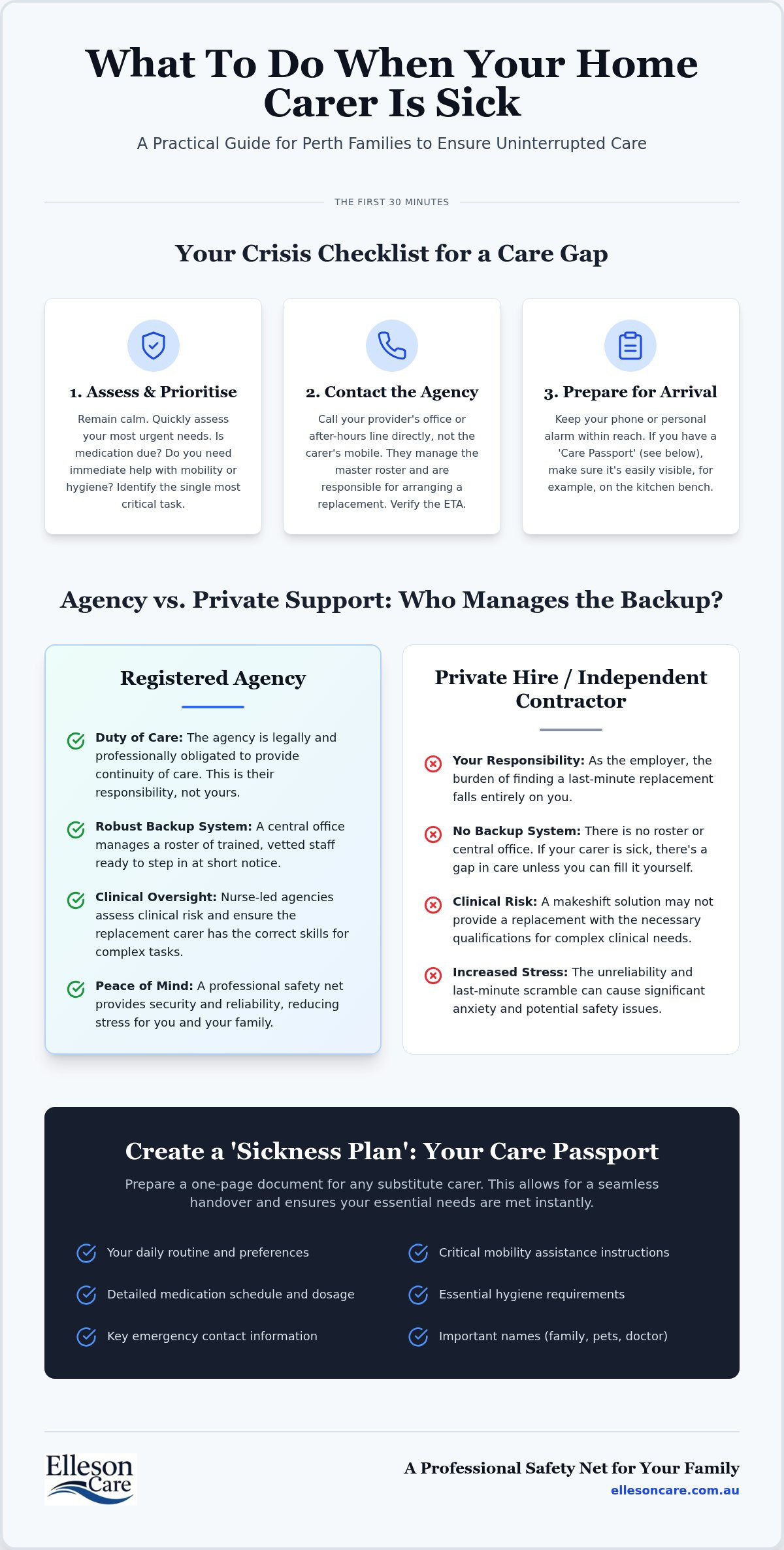
Finding out your support won't arrive as scheduled can feel overwhelming. However, understanding what happens if my home carer is sick is the first step toward regaining control of your day. Your immediate priority is to remain calm and conduct a quick assessment of your current situation. Before the adrenaline of a schedule change takes over, take a moment to breathe and evaluate your most pressing needs. Is there a medication dose due in the next hour? Do you require assistance with mobility or hygiene right now, or can these tasks wait for a replacement worker?
Once you've identified your immediate requirements, your next action should be to contact your service provider's dedicated emergency or after-hours line. It's vital to speak with the office directly rather than leaving a message on your regular carer's personal mobile. The agency holds the master roster and the responsibility to find a suitable substitute. During this call, ensure you verify the estimated time for a replacement worker to arrive at your Perth home. Clear communication at this stage prevents hours of uncertainty and allows you to notify your designated emergency contact person with accurate information. Knowing exactly what happens if my home carer is sick ensures that the agency's contingency plan is activated immediately.
The First 30 Minutes: A Crisis Checklist
The half-hour following a cancellation is critical for maintaining your safety and comfort. Use this time to prepare for the arrival of a new support worker who may not be familiar with your home layout. A quick checklist can help you stay focused:
- Review your medication schedule: Check your webster-pak or clinical chart to see if any essential doses are due before the replacement arrives.
- Keep communication close: Ensure your mobile phone or personal alarm is within reach at all times while you're alone.
- Identify the priority: Write down a single, clear sentence identifying the most critical task for the replacement carer, such as "assistance with morning medication" or "help with showering."
Who to Call First in Western Australia
In Western Australia, professional providers operate under strict guidelines to ensure your safety. To better understand the structure of these services, you might consider the broader definition of What is Home Care? and how it functions as a formal support system. While your primary contact is always your agency's coordination team, there are other avenues for support if you feel your safety is compromised. If care is consistently missed or if your provider fails to offer a suitable backup, you have the right to contact the NDIS Quality and Safeguards Commission or the Aged Care Quality and Safety Commission. For situations where clinical safety is at immediate risk and your provider is unresponsive, utilising local Perth emergency contacts or family members is a necessary precaution to ensure you're never left without essential clinical support.
Agency vs. Private Support: Who Manages the Backup?
When a support worker is unable to attend a shift, the responsibility for finding a replacement depends entirely on how your care is structured. For many Perth families, the choice between hiring an independent contractor or partnering with a registered agency comes down to this single moment of disruption. If you've engaged a private worker, you're effectively the employer. This means the task of finding a substitute falls to you, often at short notice and under significant stress. In contrast, registered NDIS and aged care providers carry a formal "Duty of Care" that requires them to have robust contingency systems in place.
The distinction becomes even more critical when clinical needs are involved. A general agency might simply look for any available staff member, but a nurse-led organisation assesses the clinical risk of the gap first. They ensure that whoever steps in has the specific competencies to manage your requirements, whether that's ventilator support or complex medication management. Understanding what happens if my home carer is sick within a professional care partnership provides a level of security that private hire simply cannot match.
The Reliability Gap: Registered Providers vs. Private Hire
The primary risk of private hire is the lack of a rostered backup system. If an independent contractor falls ill, there's no central office to reassign the shift. You may also find yourself navigating complex insurance and liability issues if a last-minute, unvetted replacement is brought in to help. For those using agency support, respite care in Perth can act as a temporary bridge, providing a structured environment where professional staff are always on hand. Agencies carry the necessary insurances and worker's compensation, protecting your family from the legal complications that can arise during a staffing crisis.
How Professional Agencies Organise Replacements
A professional agency uses a methodical approach to fill service gaps. This process is usually managed by a Support Coordinator who understands your specific routine and preferences. They don't just send the first person available; they look for a worker who can maintain your standard of care. This transition is made possible through detailed care notes and a comprehensive emergency care plan that outlines your essential needs. Good agencies also prioritise cultural sensitivity, ensuring that even a substitute worker respects your lifestyle and communication preferences. This systematic approach ensures that your day continues with as much normalcy as possible, even when your regular carer is away.
Managing Clinical Risks: When Care Cannot Be Delayed
While a missed social outing is disappointing, a missed clinical intervention can lead to avoidable hospitalisation. For families managing complex health conditions, the question of what happens if my home carer is sick takes on a much higher level of urgency. Tasks such as catheter care, managing a PEG feed, or administering time-critical medications cannot simply be postponed until the following day. Attempting to "push through" without professional support often leads to secondary complications, such as urinary tract infections or skin breakdown, which can quickly escalate into a medical emergency.
Elleson Care's nurse-led team prioritises these high-risk clinical shifts, especially during peak times like the Perth flu season. Because our organisation is led by Registered Nurses with over 22 years of experience, we understand that rigorous clinical oversight is the backbone of safe nursing services in WA. This professional framework ensures that your health remains the central priority, even when staffing disruptions occur.
Ventilator, Oxygen, and Complex Support
Clients requiring 24/7 technical medical monitoring rely on a specific set of safety protocols. When a regular carer is unwell, the replacement must have verified competency sign-offs for your specific equipment. It isn't sufficient to send a general support worker to a home with a ventilator or complex oxygen requirements. Our Registered Nurses supervise these emergency replacements, ensuring the substitute worker is fully briefed on your technical medical requirements and emergency procedures before they begin their shift. This level of supervision provides a vital safety net for families who cannot afford a gap in technical care.
Wound Management and Medication Administration
Timely intervention is vital for managing pressure injuries or chronic wounds. A delay in a dressing change can significantly increase the risk of infection or set back weeks of healing progress. We utilise digital care records to ensure that a substitute nurse can pick up exactly where the last one left off, viewing your history and specific dressing requirements in real time. Clinical continuity in the context of Perth home care is the seamless transition of medical support that ensures your treatment plan remains uncompromised regardless of who is delivering the care. This systematic approach allows you to maintain your recovery goals without the stress of repeating your medical history to every new face.
Creating a 'Sickness Plan': Minimising Disruptions to Your Routine
Preparation is the most effective way to manage the uncertainty of what happens if my home carer is sick. While a professional agency provides the staff, your personal preparation ensures that a substitute worker can step into your routine with minimal friction. By documenting your "Essential Care Minimums," you provide a clear roadmap for any new face entering your home. These minimums should distinguish between non-negotiable clinical tasks, such as medication administration or catheter care, and secondary tasks like light housework that could be deferred if the replacement arrives late in the day. We recommend keeping a physical "Care Passport" in a highly visible location, such as on the kitchen bench or near the front door, to ensure your needs are understood immediately.
It's also beneficial to train a secondary backup, such as a trusted family member or friend, on the basic layout of your home and the location of emergency supplies. While they may not be able to perform clinical tasks, their presence can provide emotional stability while you wait for a professional replacement to arrive. This multi-layered approach ensures that you're never solely dependent on a single point of failure. When you have a plan in place, the stress of a last-minute cancellation is replaced by a methodical, calm response.
What to Include in Your Home Care Folder
A comprehensive home care folder acts as a vital bridge between your regular support and a substitute worker. It should contain clear, step-by-step instructions for any unique equipment in your home, such as hoists, specialised beds, or nebulisers. Beyond the technical requirements, include your personal communication preferences and "likes or dislikes" to maintain your comfort. Knowing that you prefer a specific morning routine or have certain sensory sensitivities allows a new worker to provide care that respects your dignity. A simple map of the home, indicating exactly where clinical supplies and spare linens are kept, further reduces the need for constant questioning during the shift.
Funding Your Backup: NDIS and Aged Care Packages
Navigating the financial side of emergency care is a critical part of your sickness plan. Under the Support at Home program, which replaced previous home care structures in 2025, clinical nursing remains fully funded by the government. It's essential to work with your provider to ensure your NDIS "Core Supports" are flexible enough to cover emergency gaps or that you've pre-authorised respite hours within your aged care funding. This foresight ensures that when you need to activate a backup system, the funding is already organised to cover the cost of a substitute worker. If you're concerned about your current coverage, you can contact our team to review your care plan requirements.
Why a Nurse-Led Agency Provides Greater Peace of Mind
The strength of a care plan isn't measured by how it functions on a perfect day, but by how it holds up during a crisis. While staff illness is an unavoidable reality in the healthcare sector, the response to that illness defines the safety and dignity of the person receiving support. Choosing a nurse-led provider changes the fundamental answer to the question of what happens if my home carer is sick. Instead of a logistical scramble handled by a booking clerk, the situation is managed through a clinical lens. At Elleson Care, every roster decision is guided by over 22 years of Registered Nurse experience, ensuring that your clinical safety and personal routine remain the primary focus.
Our "Family-First" approach means we view every client as an individual with unique vulnerabilities and strengths. We don't simply send a replacement worker to fill a gap; we ensure that every substitute is thoroughly briefed on your specific clinical requirements and personal preferences before they arrive. As a West Australian owned and operated team, we possess a deep understanding of the Perth metropolitan area and the local health landscape. This local expertise allows us to respond with a level of agility and personal investment that larger, interstate corporations often struggle to match.
Clinical Leadership in Crisis Management
Having a Registered Nurse available to oversee service disruptions transforms how we respond to sick leave. When a support worker is unwell, our clinical leadership assesses the complexity of the upcoming shifts to prioritise those with high-risk needs. We remain committed to person-centred care even during peak illness periods, such as the winter flu season, by maintaining a steady, reliable presence in your home. This clinical oversight ensures that the high standards of your care are never compromised by a change in personnel. Our local knowledge of the WA health system further enables us to navigate any secondary challenges that might arise during a staffing transition, providing a stable environment for your family.
Taking the Next Step for Secure Care
If you've previously relied on a solo contractor, you may have experienced the stress of being left without support at the last minute. Transitioning to a more secure in-home aged care Perth model provides the professional safety net your family deserves. We invite you to request a clinical audit of your current sickness plan to identify any potential gaps in your backup system. By contacting Elleson Care for a holistic assessment, you can gain a clearer understanding of what happens if my home carer is sick and how our nurse-led team can provide the consistent, high-quality support you need to stay independent and safe in your own home.
Securing Your Care and Peace of Mind for the Future
Maintaining your independence at home requires more than just a schedule; it requires a reliable safety net. The vulnerability of wondering what happens if my home carer is sick is best addressed through proactive planning and a professional clinical system. By establishing a physical Care Passport and partnering with a provider that utilises rostered backup protocols, you ensure your essential needs are always met, regardless of individual staff illness.
Elleson Care offers this stability through our nurse-led team, drawing on over 22 years of experience to protect your routine and dignity. As a 100% West Australian owned and operated specialist in complex clinical and NDIS support, we prioritise your safety above all else. You deserve the confidence that comes from a steady, expert partnership that understands the local Perth health landscape. You don't have to manage care disruptions alone when you have a dedicated clinical team standing behind you.
Book a clinical consultation with Elleson Care to secure your home support today
We're here to provide the steady, professional presence you need to live with confidence and peace of mind every day of the year.
Frequently Asked Questions
Can I be charged for a shift if my carer is sick?
You are not charged for a shift that the provider cancels due to staff illness. Under current Australian consumer law and funding guidelines, you only pay for services actually delivered. If your provider is unable to fulfil a rostered shift, the cost should not be deducted from your NDIS or Support at Home budget.
How quickly should an agency find a replacement for a sick support worker?
Replacement timeframes depend on the urgency of your clinical needs. For high-risk tasks like medication administration or ventilator support, a professional agency aims to find a substitute within a few hours. Social or domestic shifts may take longer to re-roster as providers prioritise safety and clinical continuity for all clients across the Perth metropolitan area.
Is it safe to have a substitute carer I haven't met before?
It is safe to receive care from a substitute if they are supplied by a registered agency with rigorous vetting processes. Every worker should arrive with a clear briefing on your care notes and the necessary clinical competencies. This is why understanding what happens if my home carer is sick is much easier when you have a professional organisation managing the transition and staff background checks.
What happens if my NDIS support worker is sick on a weekend in Perth?
Weekend absences are managed through your provider's emergency after-hours line. Registered providers are required to maintain a point of contact outside of standard business hours to handle service disruptions. This system ensures that even on a Sunday morning, a coordinator is working to secure your essential clinical support or personal care.
Can I use my NDIS funding for emergency respite if my carer is unwell?
You can typically use your NDIS Core Supports budget for emergency in-home assistance if your regular support system fails. If your plan includes Short Term Accommodation funding, this may also be an option for temporary respite. It's best to discuss these contingencies with your Support Coordinator to ensure your funding is flexible enough for unexpected illness.
What should I do if my carer shows up to my home while they are sick?
You should politely ask the worker to leave and immediately notify the agency office if they arrive while unwell. Protecting your health is the priority, as many clients have compromised immune systems. Professional providers have strict infection control policies that require staff to stay home when they show symptoms of respiratory or gastric illness.
Does Elleson Care provide backup for complex clinical nursing shifts?
Elleson Care provides specialised backup for complex clinical shifts, managed directly by our Registered Nurses with over 22 years of experience. We understand that technical medical tasks cannot be delayed. Our nurse-led team ensures that any substitute nurse has the specific training required for ventilator management, wound care, or complex medication needs.
How do I update my 'emergency care plan' for 2026?
You should update your emergency care plan by reviewing your clinical requirements with a Registered Nurse or Support Coordinator. Ensure your "Care Passport" reflects the new 2026 Support at Home program classifications and funding levels. This document should be kept in a visible spot to help substitute workers understand what happens if my home carer is sick and a replacement is required.


