

What if the key to your parent’s independence isn't just about finding a cleaner, but about securing a clinical-led strategy that evolves as they do? We understand that the transition to the new Support at Home program, which replaced previous systems in late 2025, has left many families feeling overwhelmed by complex funding tiers and safety concerns. It's natural to worry about the reliability of local carers or the risk of falls when you aren't there to help.
This nurse-led guide simplifies the 2026 regulations to help you secure the right level of domestic assistance for seniors Perth families trust, ensuring your loved ones remain safe and dignified in their own homes. We'll walk you through the eight new funding classifications, the latest government subsidies for personal care, and a practical checklist for choosing a provider that prioritises clinical excellence and genuine human connection. Having a clear plan allows you to move away from the stress of administrative changes and focus on what truly matters: the comfort and autonomy of those you love.
Key Takeaways
- Understand how the unified Support at Home program simplifies funding classifications and removes exit fees to provide greater transparency for Perth families.
- Identify and address potential hazards in every room of the house using our comprehensive safety checklist designed to prevent falls and maintain independence.
- Learn to distinguish between everyday domestic assistance for seniors Perth and the specialised clinical nursing support necessary for managing chronic health conditions.
- Navigate the My Aged Care assessment process with confidence by understanding the specific roles of RAS and ACAT teams within the Western Australian healthcare landscape.
- Discover the benefits of a nurse-led care model that prioritises holistic well-being and clinical oversight rather than just basic household tasks.
Understanding the Support at Home Program in 2026
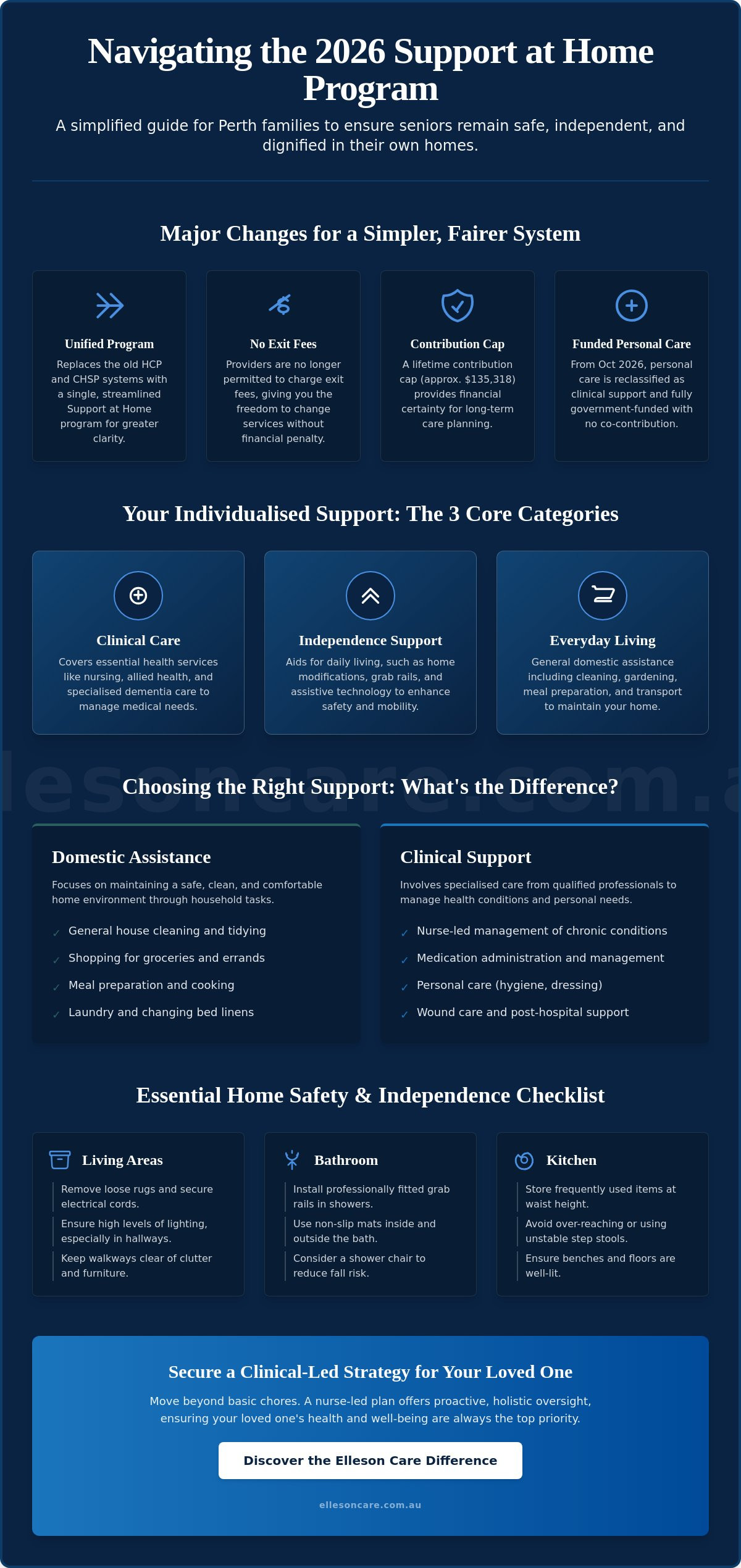
The new Support at Home program represents the most significant shift in Aged care in Australia in recent decades. By unifying the previous Home Care Packages (HCP) and the Commonwealth Home Support Programme (CHSP) into a single, streamlined system, the government has simplified how our elders access essential help. For seniors in Perth, this change moves away from rigid, bundled services toward a more flexible model that prioritises individual choice and clinical safety. The program's core objective is to ensure West Australians can age with dignity in their own communities, surrounded by the people and places they love, for as long as possible.
One of the most vital changes arriving in late 2026 involves how services are funded and accessed. From 1 October 2026, personal care will be reclassified as a clinical support. This means it'll be fully funded by the government, requiring no co-contribution from the participant regardless of their financial status. This ensures that essential hygiene and health support remain accessible to everyone. The shift toward flexible, on-demand domestic assistance for seniors Perth residents enjoy means you can increase or decrease help as your health fluctuates, rather than being locked into a static plan. Additionally, the removal of exit fees and the introduction of a lifetime contribution cap, currently set at approximately $135,318, provide much-needed financial certainty for families planning long-term care.
The 2026 Funding Model for WA Families
The new system organises support into three distinct categories: clinical care, independence support, and everyday living. This structure allows for highly specific domestic assistance for seniors Perth families can tailor to their daily needs. Instead of a "one size fits all" approach, you receive an individualised quarterly budget. A dedicated care partner helps manage this budget, ensuring funds are allocated efficiently across eight different classification levels based on the complexity of your health requirements. This nurse-led oversight ensures that your budget isn't just spent, but invested in your long-term well-being and safety.
Transitioning from the Old System
If your loved one was already receiving support before the 1 November 2025 start date, they're protected by "no worse off" grandfathering rules. This ensures they won't pay higher contributions under the new framework than they did under the old system. For those whose needs have increased over the last 12 months, a reassessment may be necessary to move to a higher funding tier. Most Perth providers have already transitioned their billing to the new itemised format. You should expect clear, per-service pricing on your monthly statements, making it easier to see exactly where your funding is going and how it's supporting your independence.
The Essential Home Safety and Independence Checklist
Maintaining independence is a collaborative effort between the individual, their family, and their care providers. Using a structured checklist allows you to identify specific gaps in your current support at home arrangements before they become emergencies. For those starting this journey, the My Aged Care portal provides the necessary framework for formal assessments, but a local safety audit is the best place to begin. Finding the right level of domestic assistance for seniors Perth residents need involves looking past the obvious chores to the subtle risks in the home environment.
Room-by-Room Safety Audit
- Living Areas: Start with the floors. Are there loose rugs or electrical cords stretching across walking paths? Ensure lighting levels are high, especially in transition zones like doorways and hallways, to prevent stumbles during the night.
- Bathroom: Falls here are often serious. Assess the need for professionally installed grab rails, non-slip mats, and shower chairs to maintain dignity and safety during personal care.
- Kitchen: Reorganise the pantry and cupboards so that frequently used items sit at waist height. This prevents the need for over-reaching or precarious bending, which can lead to dizziness or loss of balance.
Domestic Assistance Task List
Effective domestic assistance for seniors Perth families rely on covers more than just a quick vacuum. It includes essential chores that maintain a hygienic and manageable environment. Consider these priorities:
- Essential Chores: Managing laundry and changing heavy bed linens can be physically taxing. Regular help with these tasks prevents dust buildup and reduces the risk of strain.
- Meal Preparation: A reliable carer ensures nutritious food is accessible and checks the pantry for expired items. They can also help with light cooking to ensure daily nutritional requirements are met.
- Garden Maintenance: Keeping paths clear of leaves, branches, and debris is a critical safety measure. This ensures easy access to the letterbox and street without the risk of a trip.
Beyond physical safety, we must consider "invisible needs" such as social connection and cognitive health. Is your loved one engaging in regular conversation? Are they managing their medications correctly? These factors are just as vital as a clean house for long-term independence. If you feel overwhelmed by these details, our team can help you organise a personalised care plan that covers every corner of your home and well-being.
Domestic Assistance vs. Clinical Support: What Do You Need?
Under the new 2026 framework, Understanding the Support at Home Program requires a clear grasp of the distinction between everyday living tasks and clinical requirements. While domestic assistance for seniors Perth families often seek focuses on maintaining a tidy and safe household, clinical support involves specialised nursing care for complex health needs. It's beneficial to view these services through the lens of reablement. This approach doesn't just complete tasks for you; it focuses on restoring your physical and cognitive functions so you can regain your independence. Using this nurse-led guide to staying independent helps you identify when a simple helping hand needs to be bolstered by professional clinical oversight.
Even if your loved one only requires help with the vacuuming or laundry, having clinical eyes on the situation provides a vital layer of safety. A registered nurse can identify subtle changes in gait or cognitive function that a standard domestic worker might miss. This proactive monitoring ensures that minor health issues are addressed before they escalate into hospitalisations. By integrating clinical knowledge with daily support, we create a stable environment where seniors feel both looked after and empowered to manage their own routines.
When Domestic Assistance Isn’t Enough
Domestic help is a fantastic foundation, but it has defined limits. We often see families notice red flags that suggest a need for higher care levels. Sudden weight loss, missed medication doses, or an increase in confusion while performing routine tasks are signs that the current support level may be insufficient. In these instances, comprehensive home care services act as a bridge to clinical intervention. While a domestic assistant can help with the dishes, only qualified clinical staff should manage complex wound care or the administration of specialised medications. Recognising these boundaries early ensures that your loved one's health doesn't plateau or decline due to a lack of professional medical monitoring.
The Value of Holistic Care Plans
A truly effective care plan looks at the person, not just the house. There's a profound link between a clean, organised environment and a senior's mental well-being. Reducing the clutter and stress of a messy home can significantly lower anxiety levels and promote a sense of calm. From a clinical perspective, regular domestic assistance for seniors Perth residents receive also reduces the risk of infections by ensuring high-touch surfaces remain hygienic. At Elleson Care, we integrate clinical observations into every domestic visit. Our staff are trained to notice subtle changes in health or mobility that a standard cleaning service might overlook. This holistic approach ensures that every interaction contributes to a safer, healthier, and more dignified life at home.
Navigating the My Aged Care Assessment in Perth
Securing a my aged care assessment in Western Australia is the essential first step to accessing government-funded support. This process determines your eligibility and assigns you to one of the eight new funding classifications. In 2026, the system distinguishes between two primary assessment pathways. The Regional Assessment Service (RAS) typically evaluates seniors who require lower-level support, such as basic domestic assistance for seniors Perth residents need to maintain their homes. For those with more complex health requirements or chronic conditions, the Aged Care Assessment Team (ACAT) conducts a more comprehensive clinical review. Understanding which team will visit you helps set the right expectations for the conversation.
When speaking with an assessor, many seniors instinctively focus on what they can still do rather than what they find difficult. While this resilience is admirable, it can lead to an assessment that doesn't reflect your true needs. We recommend describing your "worst day" to the assessor. If you struggle to hang out the washing when your arthritis flares up, or if you feel unsteady in the shower on high-pollen days, these details are vital. Providing an accurate picture of your most challenging moments ensures your funding budget is sufficient to cover the domestic assistance for seniors Perth families rely on for long-term safety. Current wait times in the Perth metropolitan area can vary, so engaging with local advocacy groups like Advocare can provide extra support if you feel the process is moving too slowly.
Preparing for the Assessor’s Visit
Preparation is key to a successful outcome. Before the assessor arrives at your home, gather all relevant medical documents and a comprehensive list of your current medications. We strongly advise having a family member, friend, or professional advocate present during the interview. They can provide emotional support and help recall specific instances where daily tasks have become problematic. It's helpful to write a list of domestic chores that are now difficult to manage alone, such as changing heavy bed linens, reaching high shelves, or maintaining the garden paths.
Understanding Your Assessment Result
Once your assessment is complete, you'll receive a support plan outlining your assigned funding level and the types of services you can access. This document can be complex, so take the time to review the classification carefully. If you believe the outcome doesn't accurately reflect your situation, you have the right to request a review of the decision through the My Aged Care appeals process in WA. After your approval is finalised, the next step involves choosing the right aged care agency in Perth to deliver your services. If you need help interpreting your assessment results or want to discuss how to maximise your funding, you can contact our nursing team for a confidential discussion.
The Elleson Care Difference: Why Nurse-Led Support Matters
Choosing a care provider is a deeply personal decision that impacts the safety and happiness of your entire family. At Elleson Care, we believe that even the simplest household tasks deserve professional oversight to ensure they contribute to a senior's overall well-being. As a family-owned, Perth-based provider led by experienced Registered Nurses, we bring a unique clinical perspective to domestic assistance for seniors Perth residents trust. Our holistic approach means we don't just see a list of chores; we see a whole person whose dignity and autonomy must be protected. By combining clinical authority with genuine human warmth, we provide a sense of stability for families navigating the complexities of the 2026 Support at Home program.
Our clinical background ensures that every aspect of your home support is both safe and effective. We understand that maintaining a home is about more than just aesthetics. It is about creating an environment that actively prevents injury and supports health. Whether we are organising a kitchen to prevent falls or ensuring a living area is free from allergens, our focus remains on your long-term independence. This person-centred care model prioritises your choices, ensuring you remain the director of your own life while receiving the high-tier professional support you deserve.
Clinical Oversight in Every Interaction
The true value of nurse-led care lies in the expertise we pass on to our frontline staff. Our Registered Nurses personally train our support workers to identify early warning signs of health decline during routine domestic visits. While providing domestic assistance for seniors Perth families often notice that our team picks up on subtle changes, such as a slight alteration in gait, a decrease in appetite, or signs of dehydration, before these issues become serious health concerns. Having a direct line to clinical experts means that if a complex need arises, such as wound management or a change in medication requirements, the transition to clinical support is seamless and immediate. This family-centric approach provides peace of mind not only to the senior but also to their Perth-based carers, who can rest assured that their loved one is in expert hands.
Taking the Next Step with Elleson Care
We understand that every individual has a unique story and specific requirements. We invite you to a no-obligation consultation where we can discuss your specific Support at Home needs in a calm, supportive environment. Our process goes beyond just assessing tasks; we take the time to understand your personality and preferences. This allows us to match you with a support worker who isn't just technically proficient, but someone who shares a genuine connection with you. We believe that trust is built through consistency and kindness, and we are committed to being a steady, reliable presence in your home. Contact Elleson Care today to organise your personalised home support plan and discover how our nurse-led team can help you stay independent with dignity.
Securing Your Loved One's Future at Home
Coordinating the 2026 Support at Home program doesn't have to be a solo journey. By conducting a thorough home safety audit and understanding the nuances of your My Aged Care assessment, you ensure your family receives the appropriate level of funding. It is vital to remember that clinical oversight serves as a critical safeguard, even when you are only seeking help with household chores. Finding reliable domestic assistance for seniors Perth families can trust starts with choosing a provider that prioritises clinical excellence alongside daily comfort.
Elleson Care is a West Australian owned and operated provider led by Registered Nurses with over 22 years of experience. We specialise in complex clinical support and aged care, ensuring every interaction is grounded in professional expertise and human kindness. We are here to help you move forward with confidence and clarity. Enquire about our nurse-led domestic assistance in Perth to discuss a personalised plan for your family. You have the power to create a safe, stable environment where your loved ones can thrive in the comfort of their own home.
Frequently Asked Questions
What is the difference between domestic assistance and personal care?
Domestic assistance focuses on maintaining a safe and clean home environment through tasks like laundry, vacuuming, and light cleaning. Personal care involves direct physical support with activities of daily living, such as showering, dressing, and grooming. Under the 2026 rules, personal care is classified as a clinical support, meaning it's fully funded by the government without requiring a co-contribution from the participant.
Can I choose my own support workers under the Support at Home program?
You certainly have the right to choose who enters your home. The Support at Home program is designed around consumer-directed care, allowing you to partner with a provider that respects your personal preferences. We prioritise matching our support workers to your personality and specific health requirements to ensure a steady and comfortable relationship that fosters trust and safety.
How much does domestic assistance for seniors cost in Perth?
The cost of domestic assistance for seniors Perth families pay depends on their individual financial assessment and assigned funding classification. While clinical care is now fully government-funded, everyday living tasks may require a co-contribution based on your income and assets. You can expect transparent, itemised invoices from your provider, and exit fees are now banned under the new system.
Is there a waiting list for home care assessments in Western Australia?
Wait times for assessments in Western Australia fluctuate based on the volume of applications and the urgency of the senior's situation. It's advisable to begin the application process through My Aged Care as soon as you notice a decline in independence. Local advocacy groups can often provide guidance if you require an urgent reassessment due to a sudden change in your health status.
Does the Support at Home program cover gardening and home maintenance?
Gardening and home maintenance are covered when they are essential for maintaining a safe and accessible living environment. This might include clearing debris from paths to prevent falls or ensuring easy access to your letterbox and street. These services fall under the independence and everyday living tiers of the program, helping you maintain your property with dignity and reduced physical strain.
Can I use my NDIS funding for domestic assistance if I am over 65?
You generally cannot apply for NDIS funding once you have turned 65. Instead, you'll access support through the aged care system and the Support at Home program. If you were already an NDIS participant before reaching 65, you may have the option to continue with your current NDIS plan or transition to aged care services depending on your specific clinical needs and goals.
What happens to my Home Care Package if I move to a different part of Perth?
Your funding is portable and remains with you if you move within the Perth metropolitan area. Because exit fees are banned under the 2026 regulations, you can transition to a new local provider without financial penalty. If your current provider services your new suburb, you can simply update your care plan to reflect the requirements of your new home environment.
How do I know if I need an ACAT or a RAS assessment?
A Regional Assessment Service (RAS) evaluation is typically for those who need low-level support to stay independent, such as basic domestic assistance for seniors Perth residents often start with. An Aged Care Assessment Team (ACAT) evaluation is required for individuals with more complex, clinical, or specialised care needs. My Aged Care will determine which assessment you need based on your initial screening.


