

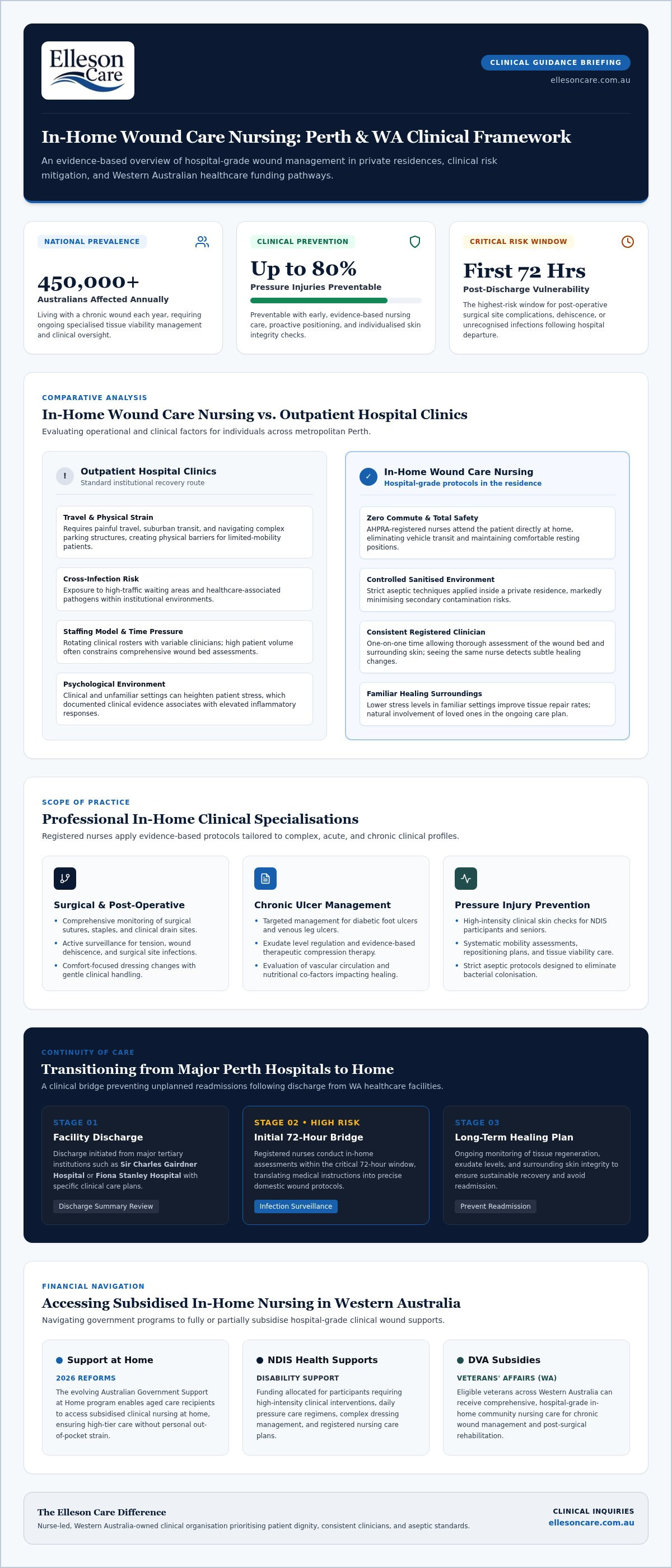
Did you know that more than 450,000 Australians live with a chronic wound every year, yet clinical research shows that up to 80% of pressure injuries are preventable with early, evidence-based nursing care? For many residents across Western Australia, the standard recovery path involves painful travel to busy outpatient clinics or the constant worry of secondary infections in a clinical setting. You shouldn't have to choose between receiving high-quality medical attention and staying in the safety of your own house.
We understand that navigating complex health needs is overwhelming, especially when you're also trying to decipher NDIS plans or the latest Support at Home funding classifications. You deserve a recovery process that focuses on your personal dignity and provides a sense of stability for your family. This guide shows you how to access professional wound care nursing at home Perth, ensuring you receive hospital-grade management from experienced registered nurses without leaving your familiar environment.
We'll walk through the benefits of receiving consistent care from the same clinician and explain how the 2026 government funding changes can often fully subsidise your clinical supports. By the end of this article, you'll have a clear, stress-free path toward faster healing and better long-term health outcomes.
Key Takeaways
- Understand why professional wound care nursing at home Perth is a safer, more effective alternative to hospital clinics for managing complex or chronic wounds.
- Discover how to navigate the new Support at Home program and NDIS health supports to ensure your clinical nursing care is appropriately funded.
- Learn about the specialised clinical protocols registered nurses use to reduce infection risks and promote faster recovery in a familiar environment.
- Identify the value of partnering with a nurse-led, WA-owned provider that prioritises personal dignity and consistent, one-on-one clinical expertise.
Why Choose In-Home Wound Care Nursing in Perth?
Selecting professional wound care nursing at home Perth offers a sophisticated alternative to the traditional hospital clinic model. This service is not merely a convenience; it's a clinical intervention led by AHPRA-registered nurses who bring hospital-grade protocols directly into your private residence. For many individuals, the journey to a medical centre involves physical strain and the risk of exposure to healthcare-associated infections. By receiving treatment in a controlled, private environment, you eliminate these external stressors and focus entirely on your physical recovery. When families choose wound care nursing at home Perth, they're choosing a model of care that prioritises the individual's comfort without compromising on clinical standards.
Personalised attention is at the heart of successful chronic wound management. In a clinic setting, staff are often pressured by high patient volumes, which can lead to rushed assessments. At home, your nurse has the time to perform a thorough evaluation of the wound bed, surrounding skin, and your general well-being. This one-on-one focus is particularly beneficial for Perth seniors or those with limited mobility who find the logistics of suburban travel and hospital parking to be a significant barrier to consistent care.
The Benefits of Healing in a Familiar Environment
The psychological impact of your surroundings plays a documented role in physiological healing. Clinical evidence suggests that lower stress levels in a familiar setting can improve the body's inflammatory response and tissue repair rates. When you're at home, you're surrounded by your own comforts and support networks. Family involvement becomes more natural, allowing loved ones to understand the care plan and provide encouragement. Consistency is another major advantage. Seeing the same registered nurse at every visit ensures they notice even the most subtle changes in your wound's progress, providing a level of stability that a rotating hospital roster simply cannot match.
Transitioning from Perth Hospitals to Home
The period immediately following discharge from major facilities like Sir Charles Gairdner Hospital or Fiona Stanley Hospital is often the most vulnerable time for a patient. Statistics indicate that the first 72 hours represent the highest risk window for surgical site complications or unrecognised infections. In-home nursing serves as a vital clinical bridge, ensuring that the complex discharge instructions provided by hospital teams are implemented accurately. This continuity of care is essential for preventing unplanned hospital readmissions and ensuring that your recovery stays on the right trajectory from the moment you arrive home.
Professional Wound Management: Services and Specialisations
Professional wound management requires a deep understanding of tissue viability and healing stages. For those seeking wound care nursing at home Perth, the service covers a broad clinical spectrum. This includes managing acute surgical incisions, complex post-operative sites, and long-term chronic lesions. Registered nurses apply evidence-based techniques to ensure every dressing change follows strict aseptic protocols. This approach minimises the risk of secondary infections that often delay recovery and ensures the wound bed remains in an optimal state for tissue regeneration.
Surgical and Post-Operative Wound Care
Managing post-operative wounds involves more than just observation. Nurses monitor sutures, staples, and drain sites for signs of tension or dehiscence. Identifying these issues early prevents the need for emergency hospital visits. Pain management is a priority; nurses use gentle techniques and appropriate timing to ensure dressing changes are as comfortable as possible. This level of clinical oversight provides peace of mind for patients transitioning from major surgical procedures back to their own homes.
Chronic Wound and Pressure Injury Management
Chronic conditions such as diabetic foot ulcers or venous leg ulcers require specialised knowledge of exudate management and compression therapy. For NDIS participants with high-intensity needs, pressure injury prevention is vital. According to HealthyWA wound care guidance, factors like poor circulation or nutrition can significantly impact healing times. A holistic approach is essential, where nurses assess mobility and dietary requirements alongside the wound site itself. By addressing these underlying factors, we support the body’s natural ability to repair damaged tissue.
Clinical monitoring involves tracking subtle changes in temperature, colour, or odour that might indicate the onset of infection. Modern wound care utilises advanced bioactive dressings, including hydrocolloids and silver-impregnated materials, to maintain a moist healing environment. These products are selected based on the specific needs of the wound bed and the patient's skin integrity. If you're looking for expert clinical support in Western Australia, our team ensures your wound care nursing at home Perth is both technically precise and deeply respectful of your personal dignity.
Comparing Home Wound Care vs. Hospital Clinics in WA
Choosing between a hospital outpatient clinic and professional home care involves weighing clinical outcomes against personal well-being. In a traditional Perth clinic setting, patients often face long wait times in crowded environments, which can be physically exhausting for those managing pain or limited mobility. Wound care nursing at home Perth replaces the stress of the waiting room with a dedicated, one-on-one clinical session. This transition isn't just about comfort; it's a strategic choice that prioritises your recovery by removing the logistical hurdles of suburban travel and the high costs of hospital parking.
There's a common misconception that hospital environments are inherently "cleaner" or safer for wound management. In reality, a well-managed home environment, overseen by a registered nurse, significantly reduces the risk of exposure to healthcare-associated infections. At home, you aren't sharing a space with other acutely ill patients, which provides a more controlled setting for healing. Additionally, home visits offer the flexibility to schedule care around your existing daily routine, ensuring that clinical support fits into your life rather than disrupting it.
Safety and Sterility Protocols at Home
Registered nurses maintain the highest clinical standards by establishing a dedicated aseptic field for every dressing change. They bring all necessary professional equipment, from sterile procedure packs to advanced bioactive dressings, ensuring the care you receive mirrors the quality of a tertiary hospital. Clinical waste is managed strictly according to Western Australian health standards, with nurses responsible for the safe disposal of all materials. This methodical approach ensures your home remains a safe, professional environment for complex clinical tasks.
Personalised Care Planning
Unlike the "assembly line" feel of a busy public hospital clinic, in-home nursing allows for a bespoke care plan tailored to your specific recovery goals. Your nurse has the time to coordinate directly with your GP or specialist, ensuring clinical continuity and a holistic approach to your health. For veterans, these services are often accessible through the DVA Community Nursing program, which supports eligible individuals in maintaining their independence. To understand how these clinical visits fit into a broader support strategy, you can explore our guide on nursing services for more detailed context on personalised home care.
Accessing Funding: NDIS, Aged Care, and DVA in Perth
Securing the right financial support is a critical step in establishing a sustainable recovery plan. Whether you're a senior navigating the aged care system or a person with a disability, several government-funded pathways exist to cover the costs of wound care nursing at home Perth. Understanding these frameworks ensures you receive high-quality clinical support without the burden of unexpected out-of-pocket expenses. Each funding stream has specific eligibility criteria, but they all share the goal of helping you stay healthy in your own community.
Navigating the NDIS for Clinical Nursing
NDIS participants can access professional nursing care under the "Disability-Related Health Supports" category. This funding is typically located within your Core budget or the Capacity Building - Improved Daily Living section. Specifically, Registration Group 0114 covers Community Nursing Care, which includes complex wound management. A Support Coordinator can assist in articulating the clinical necessity of these hours during your planning meeting. Accurate, evidence-based reporting from your registered nurse is essential for plan reviews to justify the ongoing need for specialised clinical intervention.
Home Care Packages and Clinical Care
For seniors, clinical wound management is a primary inclusion within the Support at Home Program. If you're currently utilising a Level 3 or 4 package, prioritising clinical nursing over basic domestic assistance can lead to significantly better long-term health outcomes. It's vital to choose a provider that leads with clinical expertise, ensuring your package funds are spent on interventions that prevent hospitalisation. Registered nurses provide the oversight needed to manage chronic conditions effectively within the home setting.
Veterans in Western Australia may also access support through the DVA Community Nursing program. This initiative covers clinically necessary wound care for Gold Card holders and White Card holders with accepted conditions. Before your My Aged Care assessment in Perth, it's helpful to prepare the following:
- A comprehensive list of your current medications and medical history.
- Documentation of the frequency and type of wound care you currently require.
- Notes on how limited mobility affects your ability to travel to hospital clinics.
- Contact details for your regular GP and any treating specialists.
If you need assistance determining which funding stream best fits your clinical needs, contact our specialist team today for a confidential discussion about your options.
The Elleson Care Difference: Expert Clinical Support at Home
Elleson Care stands apart as a Western Australian owned and operated provider, led by registered nurses with over 22 years of clinical experience. Unlike larger institutional organisations that focus on scale, our leadership team remains deeply involved in the clinical governance of every case. This nurse-led approach ensures that when you choose wound care nursing at home Perth, you're receiving care designed by professionals who understand the complexities of tissue viability and infection control. We believe that clinical authority should always be balanced with human warmth, creating a sense of safety and personal dignity for every individual we serve.
Our multidisciplinary support model goes beyond simple dressing changes. We provide a comprehensive range of services, from high-intensity clinical nursing to essential domestic assistance, ensuring all aspects of your well-being are addressed. By maintaining a local focus, we've built a reputation for reliability and ethical standards within the Perth community. We don't just see a clinical task; we see a person who deserves to recover with the highest standards of evidence-based practice in the comfort of their own house.
A Holistic Family Approach
We recognise that a wound recovery journey often impacts the entire household. Our "Compassionate Expert" philosophy extends to supporting primary family caregivers, who often carry the emotional weight of a loved one's recovery. To help maintain a healthy family dynamic, we offer respite care services that provide professional support when families need a temporary reprieve. Every home visit is conducted with a commitment to maintaining your autonomy. We work as partners with your family, ensuring that our presence is supportive and respectful of your private environment.
Getting Started with Elleson Care
Starting your recovery journey with us is a straightforward process designed to reduce stress for you and your family. We begin with a thorough initial clinical assessment, where a registered nurse evaluates your wound and discusses your specific goals. For individuals with complex care needs, we maintain 24/7 availability to ensure that clinical support is always accessible when it's needed most. This steady, reliable presence allows you to focus entirely on healing while we manage the technical details of your care plan. If you're ready to experience a higher standard of wound care nursing at home Perth, contact our Perth team today to discuss your requirements and schedule an assessment.
Take the Next Step Toward Healing at Home
Choosing professional clinical support within your own residence is a significant decision that prioritises your safety and personal dignity. By opting for wound care nursing at home Perth, you access hospital-grade protocols that significantly reduce the risk of infection and the physical strain of clinic travel. Whether you're navigating the NDIS, the Support at Home program, or DVA funding, the path to recovery is clearer when supported by experienced clinicians who understand the Western Australian healthcare landscape.
As a WA owned and operated provider led by registered nurses with over 22 years of experience, Elleson Care provides stable, high-quality care. We're a registered NDIS and DVA provider committed to a holistic approach that respects your autonomy and supports your family caregivers. You don't have to manage complex health needs alone. Our team provides the steady, professional presence required for effective long-term healing and peace of mind.
Book a Clinical Assessment with our Perth Nursing Team to discuss your specific requirements. We look forward to supporting your journey toward a healthier, more comfortable future in the environment where you feel most secure.
Frequently Asked Questions
Do I need a GP referral for in-home wound care in Perth?
You don't always need a GP referral to access private nursing services, but a referral is essential for government-funded pathways. For example, the DVA Community Nursing program and certain aged care streams require a formal referral from a doctor or hospital discharge planner. Having a referral also helps your registered nurse coordinate care effectively with your medical team, ensuring all clinical interventions align with your broader health recovery plan.
Can NDIS funding be used for registered nursing services?
Yes, NDIS funding can be used for professional nursing when the care is directly related to your disability. These supports are generally categorised under "Disability-Related Health Supports" within your Core or Capacity Building budget. For wound care nursing at home Perth, it's important that your plan reflects the need for clinical intervention. An AHPRA-registered nurse provides the high-intensity management required to ensure your wounds are treated with hospital-grade protocols.
Will the nurse bring their own dressings and clinical supplies?
Registered nurses arrive at each visit with a professional kit designed to establish a sterile field and perform complex clinical tasks. While nurses bring the necessary tools and equipment, the cost of dressings and consumables is typically managed through specific funding schemes. Eligible individuals can often access subsidised medical-grade supplies through the National Chronic Wound Consumables Scheme, ensuring you receive advanced bioactive dressings without facing significant out-of-pocket expenses for your recovery.
How often will a nurse need to visit for a chronic wound?
The frequency of visits depends on a clinical assessment of your wound's healing stage and the level of exudate management required. Some complex wounds may need daily attention during the initial stages, while others might only require dressing changes two or three times a week. Your nurse will establish a bespoke schedule based on evidence-based protocols, ensuring the wound bed remains in an optimal state for tissue repair and infection prevention.
What is the difference between an EN and an RN for wound management?
The difference lies in the scope of clinical practice and the level of assessment authority. A Registered Nurse (RN) is responsible for the comprehensive assessment, care planning, and management of complex or infected wounds. An Enrolled Nurse (EN) delivers high-quality clinical care but must work under the supervision of an RN. For complex wound care nursing at home Perth, an RN's leadership is vital for staging pressure injuries and performing advanced clinical evaluations.
Does Elleson Care provide wound care for DVA gold card holders?
Yes, Elleson Care is a registered DVA provider and delivers clinically necessary wound management to Gold Card holders across the Perth metropolitan area. We also support White Card holders for conditions specifically accepted by the Department of Veterans' Affairs. Our nurse-led team manages the required clinical documentation and assessments, ensuring veterans receive high-tier clinical support in their own homes while maintaining their personal dignity and independence throughout the recovery process.
Can you treat infected surgical wounds at home?
Infected surgical wounds can be managed effectively at home through diligent clinical monitoring and sterile dressing techniques. Our registered nurses are trained to identify early indicators of infection, such as increased heat, redness, or odour. When infection is suspected, we coordinate immediately with your GP or surgeon to facilitate necessary interventions like antibiotic therapy. This proactive clinical approach helps resolve complications promptly and prevents the need for an unplanned hospital readmission.


