

If your NDIS plan is the blueprint for your future, have you considered that your Core Supports budget is the foundation keeping the entire structure standing? For many Perth families, the initial relief of receiving a plan is often followed by the daunting question: what are NDIS core supports, and how do they actually change my daily life? It's natural to feel a sense of hesitation when faced with complex terminology or the fear of mismanaging your funding. You want to ensure every dollar is used effectively to support your family's dignity and independence.
We understand that navigating these requirements can feel like a heavy responsibility. This guide provides a clear, professional path through the 2026 NDIS landscape, helping you move from uncertainty to a place of quiet confidence. You'll discover how these essential funds provide the stability needed for daily independence and social participation across Western Australia. We will explore the four primary core categories, explain the flexibility of your budget, and provide a practical roadmap for choosing reliable, nurse-led support that respects your personal autonomy and long-term goals.
Key Takeaways
- Learn what are NDIS core supports and how they serve as the flexible foundation for your daily independence and community participation.
- Identify the four primary budget categories to ensure your funding effectively covers essential personal care, transport, and disability-related consumables.
- Understand the critical difference between 'doing' supports and 'learning' supports to maximise the impact of your funding on your quality of life.
- Discover how a nurse-led clinical perspective can enhance the safety and reliability of your daily support services in the Perth metropolitan area.
- Follow a clear roadmap for selecting local providers who align with your personal goals and provide the stability your family deserves.
Breaking Down the Basics: What are NDIS Core Supports?
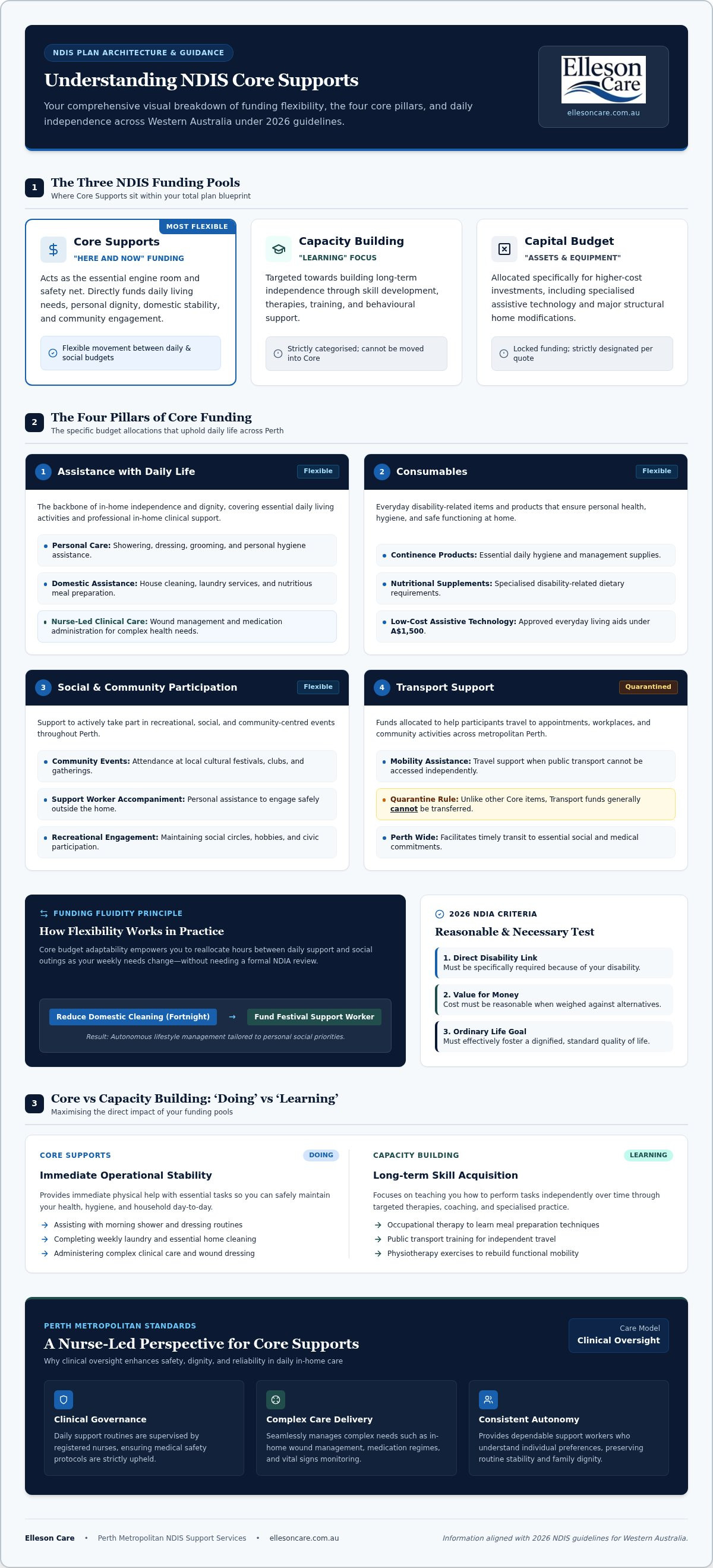
Understanding the structure of your funding is the first step toward reclaiming a sense of order in your daily life. Within the National Disability Insurance Scheme (NDIS), your plan is divided into three distinct pools: Core, Capacity Building, and Capital. While Capacity Building focuses on learning new skills and Capital covers expensive equipment or home modifications, Core Supports are designed for the "here and now." When families ask what are NDIS core supports, we explain that they are the most versatile part of your budget, specifically intended to assist with daily living and social participation. These funds act as a safety net, ensuring your basic needs are met so you can focus on bigger goals.
Unlike other budget areas that are strictly "locked," Core funding is generally flexible. This means you have the autonomy to decide how to allocate your resources based on your changing weekly requirements. If you find you need more assistance with personal care one month and less with community activities the next, the system allows for this movement. It's a structure built to accommodate the reality that life doesn't always follow a rigid schedule. Understanding what are NDIS core supports helps you see them as the engine room of your independence, providing the practical help you need to thrive in the Perth community.
Why Core Supports are the Foundation of Your Plan
Stability at home is the prerequisite for progress elsewhere. Without reliable assistance for hygiene, nutrition, and safety, it becomes nearly impossible to engage in therapy or employment. These supports maintain your fundamental health and wellbeing, providing a dignified standard of living. Under the current 2026 guidelines, the NDIA funds these services when they are deemed "reasonable and necessary." This means the support must be directly related to your disability and represent value for money while being effective in helping you live an ordinary life. By securing this foundation, you create the mental and physical space required to pursue more complex aspirations.
The Flexibility of Core Funding Explained
The true power of this budget lies in its adaptability. You can move funds between categories like Assistance with Daily Life and Assistance with Social and Community Participation without needing a formal plan review. For example, if a participant decides to reduce their domestic cleaning hours for a fortnight to fund a support worker's attendance at a local community festival, they can do so. This flexibility empowers you to respond to opportunities as they arise. Please remember that Transport funding is usually quarantined and cannot be moved, but for most other core needs, you remain in the driver's seat of your own care.
The Four Pillars: Exploring the Categories of Core Funding
While the flexibility discussed earlier is a significant advantage, effective plan management requires a thorough understanding of the four specific categories that define what are NDIS core supports. These categories are structured to address different aspects of your life, from the clinical safety of your morning routine to your ability to travel across Perth for social engagements. By breaking down these pillars, we can better see how they work together to provide a comprehensive support system that prioritises your dignity and comfort.
Assistance with Daily Life and Consumables
Assistance with Daily Life is often considered the backbone of in-home independence. It covers essential tasks such as showering, dressing, and hygiene. For participants with more complex health needs, this category also includes specialised nursing services to manage clinical requirements like wound care or medication administration within the home. Beyond personal care, domestic assistance provides help with cleaning, laundry, and meal preparation, ensuring your living environment remains safe and healthy. This clinical oversight is particularly important for families who require a higher standard of safety and professional expertise in their daily routines.
The Consumables budget is for the everyday items you use because of your disability. Following NDIA guidance on core supports, this covers continence products, nutritional supplements, and low-cost assistive technology under A$1,500. Having these items readily available reduces the financial strain on families and ensures that daily needs are met without interruption. If you're unsure how to categorise a specific item, our team can help you assess your core needs to ensure your funding is utilised correctly and ethically.
Social Participation and Transport
Maintaining a connection to the Perth community is vital for long-term mental health and wellbeing. Assistance with Social and Community Participation provides the support worker hours needed to engage in recreational activities, whether that's visiting the Swan River, attending local clubs, or simply completing the weekly grocery shop. This pillar isn't just about "getting out"; it's about building the confidence to participate in civic life and foster genuine social connections throughout Western Australia. It allows you to maintain your autonomy while staying active in the environments where you feel most comfortable.
Transport funding completes the core budget by ensuring you can get to work, school, or medical appointments safely. This is typically divided into three levels based on your circumstances. Level 1 is generally for those not working or studying, Level 2 for those working or studying up to 15 hours a week, and Level 3 for those working or studying over 15 hours. Unlike other core areas, transport is often paid directly to you as a periodic allowance. This provides the freedom to choose the travel method that best suits your mobility and safety requirements, ensuring you remain connected to the people and places that matter most.
Flexibility and Choice: Core Supports vs. Capacity Building
When considering what are NDIS core supports, it's helpful to view them as the "doing" part of your plan, whereas Capacity Building represents the "learning." While Capacity Building funding is allocated for therapies and skill development, Core Supports provide the immediate, hands-on assistance required to manage each day safely. For many Perth residents, Core services are the first to be engaged because they provide the vital stability needed before a participant can effectively focus on long-term goals. You cannot build new skills if your basic daily needs for safety and hygiene aren't consistently met.
These services also provide essential respite care in Perth, offering families the opportunity to recharge while knowing their loved one is in capable, professional hands. This balance is fundamental to a holistic approach to care, ensuring that both the participant and their support network can thrive within the wider framework of Western Australian disability support services. By addressing these foundational needs first, you create a sense of security that allows the entire family to look toward the future with confidence.
How the Budgets Work Together
The two budget types are designed to complement each other. For instance, a support worker funded through Core might assist a participant in getting ready and travelling to a physiotherapist appointment, which is funded through Capacity Building. It's a partnership where the Core support facilitates the success of the Capacity Building goal. It is important to remember that while Core funding is flexible within its own categories, you cannot move money from your Capacity Building budget into your Core budget. Understanding this distinction prevents administrative errors and ensures your funds last for the duration of your plan.
The 'Reasonable and Necessary' Test
To determine if a specific service is fundable, the NDIA applies a "reasonable and necessary" criteria. This ensures that every support is effective, beneficial, and represents value for money. When assessing what are NDIS core supports for your specific situation, ask yourself if the support is directly related to your disability and if it helps you achieve your plan goals. It shouldn't be a support that is more appropriately provided by family, friends, or general community services. Providing clinical evidence from a registered nurse can significantly strengthen your case for specific core funding. A professional clinical assessment documents the necessity of supports, ensuring the NDIA understands the practical impact of the service on your safety and independence.
Maximising Your Plan: Practical Tips for Accessing Support in Perth
Understanding what are NDIS core supports is a vital first step, but the true value lies in how you apply that funding to your daily life. Implementation within our unique West Australian landscape requires a proactive approach to ensure your budget translates into genuine stability. Start by reviewing your primary plan goals. Your core budget should directly facilitate these outcomes. If a goal is increased community involvement, your core funding should be allocated to support worker hours that make these outings safe and regular. Tracking your spending monthly is also essential; it ensures your resources last the full duration of your plan without unexpected shortfalls.
When you begin interviewing local Perth providers, look for organisations that demonstrate specific experience with your disability. It's helpful to set up service agreements that clearly define your expectations regarding staff consistency and communication. A well-drafted agreement protects your rights and ensures both parties are aligned on the standard of care. Because the Perth market is distinct, choosing a partner with deep local roots often leads to better reliability and a more personalised connection to community resources.
Finding the Right Perth Provider
Choosing a provider that understands both NDIS requirements and in-home aged care Perth ensures a higher level of clinical expertise. This is particularly beneficial for participants with complex medical needs who require a nurse-led approach. During your search, ask prospective providers how they handle staff turnover and whether they provide clinical oversight for their support workers. In WA, you have the choice between registered and unregistered providers. Registered providers must meet rigorous NDIS Commission standards for safety and quality, which offers an extra layer of protection for your family. If you're looking for a partner who prioritises clinical safety, you can reach out to our Perth team for a confidential discussion about your needs.
Managing Your Funding Options
Your management style significantly impacts how you access core supports. NDIA-managed plans offer the least administrative burden but limit you to registered providers. Plan-management is a popular choice for Perth families, as it offers the flexibility to use both registered and unregistered providers while an intermediary handles the invoices. Self-management provides the most control but requires significant time for record-keeping. While the NDIS is the primary focus for many, staying informed about the Support at Home Program is also wise for families with diverse care needs. Each option has its own merits, and the right choice depends on your capacity and the level of autonomy you desire.
A Nurse-Led Approach to Core Supports with Elleson Care
At Elleson Care, our perspective on what are NDIS core supports is defined by a rigorous commitment to clinical excellence and the preservation of personal dignity. As a nurse-led organisation, our leadership team brings more than 22 years of registered nursing experience to the management of disability services. This clinical foundation ensures that every aspect of your care, from high-intensity personal assistance to domestic help, is delivered with professional oversight. We operate as "Compassionate Experts," a model that balances authoritative medical knowledge with the genuine human warmth necessary for a supportive home environment.
Our core services are designed to address the most fundamental aspects of your daily life. We provide comprehensive personal care, including assistance with hygiene and dressing, alongside domestic support for cleaning, laundry, and meal preparation. Additionally, our community access services help you engage with the Perth community safely and confidently. By choosing a provider with deep clinical roots, you ensure that your daily supports are integrated into a holistic view of your health and wellbeing.
Why Clinical Oversight Matters for Core Supports
Integrating clinical oversight into daily core supports provides a layer of safety that standard providers may lack. Our nurses are trained to recognise early indicators of health changes during routine daily care, such as skin integrity issues or subtle shifts in mobility. Identifying these signs early can prevent complications and reduce the need for emergency interventions. This proactive approach offers immense peace of mind for families and carers, knowing that their loved one is being supported by a team capable of managing complex needs. We believe that high-quality support should always be person-centred, respecting your choices while maintaining a safe and stable environment.
Getting Started with Elleson Care in Perth
Transitioning your core supports to our team is a straightforward and respectful process. As a West Australian owned and operated provider, we understand the local landscape and the specific challenges faced by Perth families. We prioritise consistency in our staffing, ensuring you build a reliable relationship with the people entering your home. Our values are rooted in integrity and advocacy, and we are committed to helping you use your funding to achieve genuine independence. We invite you to contact our Perth-based team for a respectful, confidential discussion about your goals and how our nurse-led approach can provide the foundation your family deserves.
Empowering Your Independence through Professional Care
Establishing a stable foundation for your daily life is the most significant step you can take toward achieving your long-term aspirations. By understanding what are NDIS core supports and how to utilise their inherent flexibility, you ensure your family remains supported through every challenge. These essential services provide the reliability needed to maintain your health, dignity, and connection to the Perth community. Choosing a partner who prioritises clinical safety and personal respect allows you to focus on the future with a sense of security.
Elleson Care is a 100% West Australian owned and operated provider, led by Registered Nurses with over 22 years of clinical experience. We specialise in complex clinical care and daily living support, ensuring that your foundation is managed with the highest professional standards. Our team is dedicated to providing holistic, family-centred assistance that truly understands the unique needs of our local community. You don't have to navigate these complex requirements alone. We invite you to speak with our Perth-based nursing team about your NDIS Core Supports today to discuss your goals in a respectful, supportive environment. Your journey toward greater independence is a path we are honoured to walk with you.
Frequently Asked Questions
Can I use my Core Supports budget to pay for a cleaner in Perth?
Yes, you can use your budget for a cleaner in Perth under the Assistance with Daily Life category. This funding covers domestic assistance tasks such as cleaning, laundry, and meal preparation to help you maintain a safe and hygienic living environment. It is essential that these supports are directly related to your disability needs and are deemed reasonable and necessary. Working with a local provider ensures these services are tailored to your specific household requirements.
Is transport always included in NDIS Core Supports?
Transport is not automatically included in every NDIS plan. It is typically allocated as a specific budget based on your individual circumstances, such as whether you can access public transport independently. The funding is often divided into three levels depending on your employment or study status. Unlike other categories, transport funds are usually paid directly to the participant as a periodic allowance and cannot be moved flexibly between other core support areas.
What happens if I run out of Core Supports funding before my plan ends?
If you anticipate running out of funding before your plan ends, you should contact your Support Coordinator or the NDIA immediately. You cannot spend funds that haven't been allocated, so regular monitoring through the NDIS portal is vital. A plan reassessment may be necessary if your circumstances have changed significantly. We recommend tracking your monthly spending to ensure your resources are managed sustainably across the full duration of your plan cycle.
Can I use Core Supports to buy groceries or everyday food items?
Generally, you cannot use your budget to buy regular groceries or everyday food items. The NDIS considers these to be standard living costs that everyone incurs regardless of their disability. However, if you have specific disability-related nutritional requirements, specialised supplements or enteral feeding formulas may be covered under the Consumables category. It is important to clarify these distinctions with your provider to ensure all spending remains compliant with the latest legislative guidelines.
Do I need a quote from a provider before I can use my Core budget?
You don't usually need a formal quote from a provider before using your core budget for standard services like personal care or domestic help. However, establishing a clear service agreement is highly recommended. This document outlines the expected standard of care, staff consistency, and total costs, providing protection for both you and the provider. For higher-cost items under the Consumables or Capital budgets, the NDIA may require specific quotes or professional assessments before approval.
What is the difference between Core and Capacity Building in simple terms?
In simple terms, Core Supports focus on "doing" the tasks you need help with right now, while Capacity Building focuses on "learning" new skills for the future. Core funding assists with daily living activities and community participation to maintain your current quality of life. Capacity Building is allocated for therapies and training that increase your independence over time. Understanding what are NDIS core supports helps you distinguish between immediate assistance and long-term skill development goals.
Can NDIS Core Supports be used for clinical nursing care at home?
Yes, NDIS Core Supports can be used for clinical nursing care at home when it is directly related to your disability. This includes complex tasks like wound management, catheter care, and medication administration. At Elleson Care, our registered nurses provide this specialised oversight, ensuring that your daily personal care meets high clinical standards. This clinical support is funded under the Assistance with Daily Life category, bridging the gap between hospital-level care and independent home living.
How do I find a reliable NDIS support worker in the Perth metro area?
Finding a reliable support worker in the Perth metro area involves looking for local providers with deep roots in the Western Australian community. We recommend choosing a registered provider that offers clinical oversight and prioritises staff consistency. Interviewing prospective providers about their experience with your specific disability and their approach to safety is essential. A nurse-led organisation like Elleson Care provides an extra layer of professional accountability, ensuring your support team is both technically proficient and compassionate.


