

You are sitting at your desk in the Perth CBD, but your mind is kilometres away, wondering if the missed call on your phone was a simple greeting or a medical emergency. It's a quiet, persistent anxiety that many West Australians face as their parents choose to age in the comfort of their own homes. You want them to maintain their independence, yet the fear of a fall or a sudden health decline feels like a shadow that never quite leaves you. Finding genuine peace of mind for parents living alone isn't just about installing a personal alarm; it's about knowing a professional eye is watching over their clinical wellbeing when you can't be there.
We understand the guilt of not visiting enough and the confusion that comes with navigating the new Support at Home program. This article outlines how to ensure your elderly parents stay safe and healthy without compromising their dignity. You'll discover how a nurse-led approach provides the clinical safety net your family needs, helping you move from a place of constant worry to one of steady confidence. We will break down the latest Australian aged care updates and show you how professional oversight can catch minor health changes before they escalate into hospital visits.
Key Takeaways
- Learn how to identify subtle changes in your parent's home environment, such as the "fridge test," that indicate a need for more structured support.
- Discover how to build a holistic safety net that combines essential home modifications with professional clinical oversight to prevent falls and accidents.
- Navigate the Australian aged care system with confidence by understanding the transition to the Support at Home program and the My Aged Care assessment process.
- Understand why nurse-led clinical support offers the highest level of peace of mind for parents living alone by monitoring health trends before they escalate.
- Balance the use of modern monitoring technology with your parent's fundamental need for dignity, privacy, and continued independence in their Perth home.
Recognising the Signs: When Living Alone Becomes a Concern
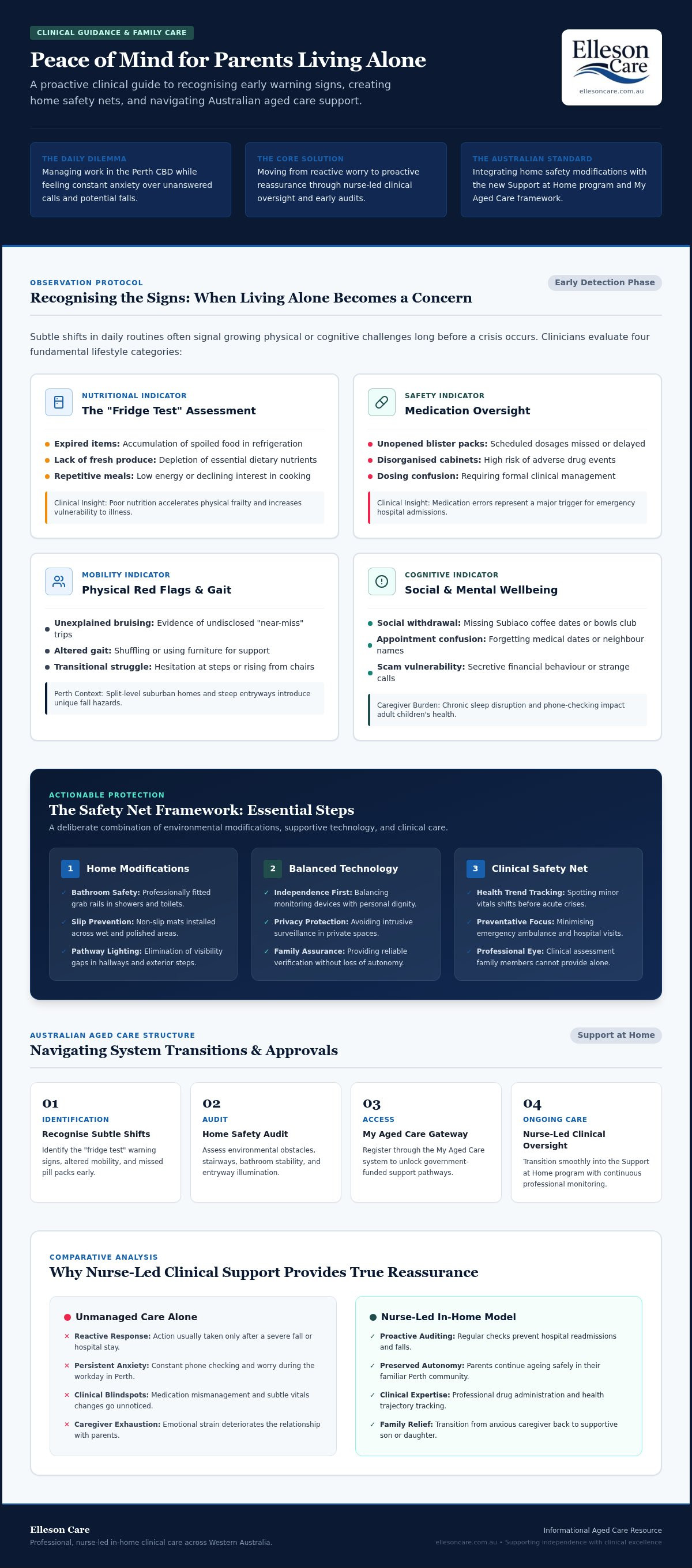
It's often the small details that first signal a shift in your parent's ability to manage their daily life. You might notice a layer of dust on surfaces that were once pristine or a garden that is beginning to look overgrown. While these changes seem minor, they frequently indicate that the physical or cognitive demands of aging in place are becoming overwhelming. Achieving true peace of mind for parents living alone requires looking past the surface to identify these early warning signs before they lead to a crisis.
One of the most effective ways to assess nutritional health is what clinicians call the "Fridge Test." Open the refrigerator and look for expired items, a lack of fresh produce, or a reliance on repetitive, low-nutrient meals. Poor nutrition often stems from a lack of energy to cook or a loss of interest in eating, which can rapidly accelerate physical frailty. Similarly, social withdrawal is a critical indicator. If a parent who once enjoyed regular bowls club meetings or coffee dates in Subiaco suddenly stops attending, it may point toward cognitive decline or depression. Additionally, medication mismanagement is a major trigger for professional intervention. Finding unopened pill blister packs or seeing a disorganised medicine cabinet suggests they need clinical support to avoid adverse drug events.
Physical Red Flags to Watch For
Physical safety is paramount for seniors living independently. Keep an eye out for unexplained bruising on their arms or legs, which often suggests "near-miss" trips or falls they haven't mentioned. In many Perth suburbs, older split-level homes or houses with steep entryways present unique challenges. You might notice your parent:
- Struggling to rise from a deep lounge chair or their favourite bed.
- Hesitating before navigating internal steps or garden paths.
- Demonstrating a change in gait, such as shuffling or holding onto furniture for balance.
These changes aren't just a natural part of getting older. They are clinical indicators that a professional safety audit is necessary to prevent a hospital admission.
Cognitive and Emotional Indicators
Cognitive health can be harder to track than physical mobility. Increased confusion regarding medical appointments or forgetting the names of familiar neighbours are clear signals that their support needs are changing. Seniors are also increasingly targeted by sophisticated phone and internet scams. If your parent seems unusually secretive about their finances or mentions strange "bank" calls, they may be at risk. Finally, don't ignore the "Caregiver Burden." If you find yourself unable to sleep or constantly checking your phone for missed calls, your own health is at risk. Recognising these signs early allows for a proactive approach to aged care, ensuring your parent's dignity remains intact while you regain your own peace of mind for parents living alone.
The Safety Net Framework: Essential Steps for Peace of Mind
Achieving true peace of mind for parents living alone requires more than a single solution. It demands a holistic safety net, which is a deliberate combination of environmental adjustments, supportive technology, and a dedicated team of people. A proactive approach is vital; waiting until a crisis occurs often limits the choices available for maintaining independence. By acting early, you ensure that the transition to support feels like a natural progression rather than a loss of autonomy.
A fundamental step involves organising a comprehensive home safety audit. This process goes beyond looking for loose rugs. It involves identifying lighting gaps in entryways and ensuring that the physical layout of the home supports mobility. When combined with clinical oversight, these environmental changes form a robust barrier against hospital readmissions. While My Aged Care provides the gateway to government-funded support, the immediate safety of the home is a practical priority that families can address today. Establishing this framework early provides the reliable clinical safety net that family members cannot offer alone.
Modifying the Home Environment
Wet areas like the bathroom are high-risk zones where simple modifications make a significant difference. Installing professionally fitted grab rails and non-slip mats provides stability during daily routines. Lighting is another critical factor; improving visibility in hallways and exterior entryways reduces the risk of missteps during the evening. In the kitchen, assessing fire safety and ensuring frequently used items are within easy reach helps maintain a parent's confidence while they prepare meals. These small changes collectively contribute to lasting peace of mind for parents living alone.
Establishing a Communication Routine
Effective communication is the heartbeat of a safety net. Setting up scheduled check-in calls ensures regular contact without making your parent feel like their privacy is being invaded. It's helpful to share this responsibility among siblings or trusted friends to prevent caregiver burnout. We recommend creating an "In Case of Emergency" (ICE) folder that remains in a visible location, containing their medical history, current medications, and key contact details. Integrating specialised clinical support into this routine adds a professional layer of protection, ensuring health changes are noted by experts who understand the nuances of aged care.
Technology vs. Human Connection: Finding the Right Balance
Modern gadgets offer a vital sense of security, but they are tools rather than complete solutions. Ensuring peace of mind for parents living alone requires a nuanced blend of digital vigilance and human empathy. While a smart sensor can track movement through a hallway, it cannot detect the subtle change in a parent's skin tone or the slight tremor in their hand that signals a brewing infection. Technology provides the data, but human connection provides the context.
Smart home sensors are becoming increasingly popular because they monitor activity levels without the intrusive nature of cameras. These systems can alert family members if a kettle hasn't been boiled by 10:00 am or if a bathroom hasn't been accessed for several hours. However, technology cannot replace the "clinical eye" of a registered nurse. A nurse identifies the underlying cause of a health shift, such as dehydration or a medication side effect, which a sensor simply records as "reduced activity." Integrating these tools with professional oversight ensures that your parent's safety net is both high-tech and high-touch.
Modern Assistive Technology Options
Choosing the right device depends on your parent's comfort level and cognitive health. Monitored medical pendants are excellent for immediate emergency response, whereas unmonitored smartwatches offer a more discreet look for active seniors. For those managing complex medication regimes, automated dispensers prevent accidental double-dosing and provide alerts to both the user and their family. In Western Australia, telehealth options have also expanded, allowing routine GP consultations to take place from the lounge room. You can often explore funding for these assistive technologies through My Aged Care during your assessment process.
The Irreplaceable Value of Personal Care
Domestic assistance provides more than just a clean house; it offers essential social company that wards off senior isolation. Regular care visits in Perth suburbs like Floreat or Scarborough allow seniors to maintain their community links, whether that's a trip to the local library or a walk in a nearby park. These visits serve as a "second set of eyes" for the family, identifying issues that a parent might downplay during a phone call. Social interaction is a powerful driver of mental health and longevity, making the presence of a compassionate support worker just as critical as any fall detection wearable for long-term peace of mind for parents living alone.
Navigating the Australian System: My Aged Care and Funding
The Australian aged care landscape has undergone significant reform to better support seniors in their own homes. As of November 1, 2025, the support at home program replaced the previous Home Care Packages model. This new system introduces eight distinct funding classifications, with annual support ranging from approximately A$10,731 for Classification 1 to A$78,106 for Classification 8. Understanding these tiers is essential to securing peace of mind for parents living alone, as it ensures they receive a budget that reflects their actual clinical and domestic needs.
Maximising this funding requires a strategic approach. While the government provides the budget, you have the autonomy to choose how it's spent between clinical nursing, personal care, and domestic help. For parents with permanent disabilities who are under the age of 65, NDIS funding remains the primary avenue for support. Navigating these two systems can feel complex, but focusing on a proactive application process ensures your parent doesn't fall through the gaps during a health transition.
The My Aged Care Assessment Process
Accessing government-funded support begins with a referral to My Aged Care. For Perth families, this typically involves a home visit from an Aged Care Assessment Team (ACAT). The assessor evaluates physical mobility, cognitive health, and the safety of the living environment. To prepare your parent for this visit, it's helpful to organise the following:
- A current list of all prescribed medications and dosages.
- Contact details for their regular GP and any specialists.
- A summary of recent health events or "near-miss" incidents in the home.
Honesty during the assessment is vital. Many seniors tend to "put on a brave face" for visitors, but downplaying daily struggles can result in a lower funding classification than they truly require. While national waitlists for home care support remain high, starting the application early helps manage West Australian wait times and provides a clearer path to long-term safety.
Funding and Financial Considerations
It's important to distinguish between government-funded care and private-pay options. Most recipients are asked to pay a basic daily fee, which is currently set at a maximum of A$12.48 per day. If your parent has the financial means, private-pay services can be used to bridge the gap while waiting for an assessment or to add extra hours of clinical oversight. A local nursing services provider can review your parent's support plan to ensure every dollar is used effectively to maintain their independence. Speak with our Perth-based care coordinators to learn how to structure a budget that delivers genuine peace of mind for parents living alone.
Why Nurse-Led Home Care is the Ultimate Solution
Choosing the right provider is a significant decision that impacts the entire family. Elleson Care brings over 22 years of nursing experience to every home we enter, offering a level of clinical leadership that general domestic agencies cannot match. This expertise provides the ultimate peace of mind for parents living alone, as it ensures that subtle health changes are identified and managed by professionals with the highest level of training. We don't just provide a service; we act as a steady, protective presence that advocates for your parent's wellbeing.
Our approach is fundamentally person-centred, meaning we respect your parent's autonomy and their specific goals for aging in place. We provide a single point of contact for both clinical and domestic needs, which simplifies communication and reduces the stress on family members. By blending high-tier professional standards with genuine human warmth, we ensure that your parent feels respected and cared for as an individual, not just a client on a schedule.
Clinical Excellence at Home
Registered Nurses oversee every aspect of our support, ensuring that clinical standards are never compromised. This oversight is vital for managing complex needs such as wound care, medication administration, and the monitoring of chronic diseases. When a parent is discharged from a Perth hospital, the transition back to their own home is a high-risk period. Our nurse-led team manages this process with precision, implementing evidence-based practices to prevent complications and reduce the likelihood of hospital readmission. Having a clinician oversee personal care workers ensures that every interaction is an opportunity to check for signs of decline or improvement.
The Family-Centred Approach
The relationship between an adult child and their parent can become strained when the child is forced into a primary caregiver role. Professional support allows you to step back from clinical tasks and return to your role as a son or daughter. Utilising professional respite care perth services restores this vital family balance, giving you the space to enjoy your time together without the shadow of caregiver anxiety. We focus on building a consistent team of carers to foster trust and familiarity, ensuring your parent feels safe with every visit.
To ensure your parent remains safe and independent in their own home while you regain total peace of mind for parents living alone, it's time to partner with experts who understand the local West Australian health landscape. Book a consultation with our nursing team today to discuss a personalised care plan that meets your family's unique needs.
Empowering Independence and Safety at Home
Maintaining the dignity of a loved one while ensuring their safety is a delicate balance, but it's one that every Perth family can achieve with the right support. By moving from a reactive mindset to a proactive safety net, you prevent minor health shifts from becoming major emergencies. Whether it's through environmental home modifications, smart monitoring, or navigating the new Support at Home funding classifications, the goal remains the same: total peace of mind for parents living alone.
Professional oversight is the final piece of the puzzle. As a 100% West Australian owned and operated provider, we understand the local health system and the unique needs of our community. Our clinical services are led by Registered Nurses with over 22 years of experience, specialising in complex care and NDIS support. This authoritative yet compassionate approach ensures your parent stays safe, healthy, and independent in the home they love.
Secure your parents’ future with Perth’s nurse-led home care specialists at Elleson Care.
You don't have to carry the weight of caregiver anxiety alone. Taking the first step today ensures a stable, supported future for your family and protects the autonomy of those you love most.
Frequently Asked Questions
Is it safe for an 80-year-old to live alone?
Safety for an 80-year-old depends on their physical mobility and cognitive status rather than just a number. Many seniors live independently in Perth well into their 90s by using a holistic safety net. It's safe if their home environment is modified to prevent falls and they have professional clinical oversight to catch health issues early. This proactive approach provides genuine peace of mind for parents living alone while respecting their choice to stay in familiar surroundings.
How do I talk to my parents about getting help at home?
Approach this conversation with empathy by focusing on their desire to maintain independence. Instead of suggesting they "need help," frame the discussion around "staying home longer" and reducing your own worry. Start with small, non-intrusive services like domestic assistance or a clinical health check. Emphasise that bringing in a professional team is a strategy to protect their autonomy, ensuring they don't have to move into a facility prematurely.
What is the best medical alert system for seniors in Australia?
The best system depends on your parent's specific lifestyle and technical comfort. Monitored medical pendants are excellent for those at high risk of falls, as they connect directly to a response centre. Active seniors might prefer unmonitored smartwatches with fall detection. However, remember that technology is only one part of the safety net. It works best when combined with regular clinical visits from a registered nurse who can assess their physical wellbeing.
Can I get government funding for my parent who lives alone?
Yes, most older Australians living alone are eligible for government support. The primary route is through the My Aged Care Support at Home program, which provides funding based on eight different care classifications. If your parent is under 65 and has a permanent disability, they may qualify for NDIS support services instead. These programs are designed to cover the costs of clinical care, domestic help, and home modifications to keep seniors safe.
What happens if my parent refuses to have a carer in the house?
Resistance is a natural response to a perceived loss of privacy. We recommend starting with a clinical health assessment led by a registered nurse rather than a carer. Parents often accept medical oversight more readily than domestic help because it feels like professional healthcare. Building trust through a consistent, nurse-led team helps them see support as a way to enhance their quality of life rather than a sign of weakness or dependence.
How often should I check on my parent who lives alone?
While daily phone calls are helpful, the frequency of physical checks should be based on their clinical needs. If your parent has chronic health conditions, professional nursing visits once or twice a week provide a much higher level of safety than a quick social visit. Establishing a predictable routine helps you monitor their health trends effectively. This professional oversight is what truly delivers lasting peace of mind for parents living alone in Perth.
Does My Aged Care cover clinical nursing services at home?
Yes, My Aged Care funding covers a wide range of clinical nursing services delivered in the home. This includes complex tasks such as wound management, catheter care, and medication administration. Under the new Support at Home program, clinical care is a prioritised category designed to prevent hospital admissions. Having a registered nurse manage these clinical requirements ensures your parent receives high-tier professional care while remaining in the comfort of their own home.
What is the difference between domestic assistance and personal care?
Domestic assistance focuses on the home environment, covering tasks like cleaning, laundry, and grocery shopping. Personal care involves direct physical support for the individual, such as assistance with showering, dressing, and grooming. While both are essential for independence, clinical support is a third tier that involves medical interventions by trained nurses. A holistic care plan usually combines all three to ensure the parent is safe, healthy, and their home is well-maintained.


